
Loose Screws and Worn Washers
Wind and temperature swings work exposed screws loose until the rubber washers split. We back them out, fit larger screws where the holes have wallowed, and seal each head before any coat goes on.
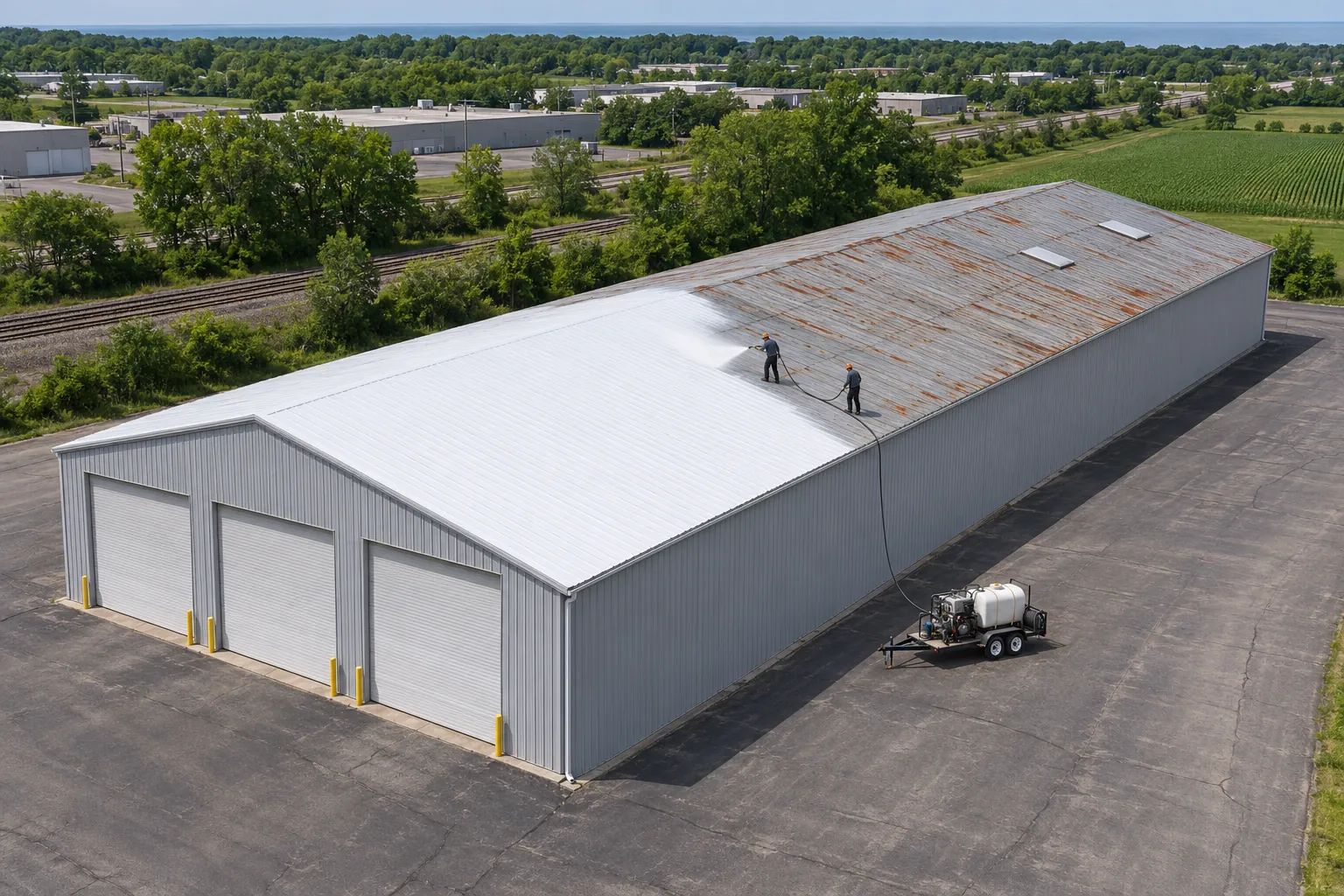
Erie metal roof coating starts with a walk over every panel. We repair loose fasteners, open seams, and rust, then coat the metal.
Six conditions turn up on most roofs we walk before Erie metal roof coating goes on. Each one is repaired first, so the coating covers solid metal.
Wind and temperature swings work exposed screws loose until the rubber washers split. We back them out, fit larger screws where the holes have wallowed, and seal each head before any coat goes on.
Panel laps lift a little each winter as the metal moves. Water pulled into those gaps by wind shows up as drips along a purlin line, so laps are stitched tight and sealed with seam tape or mastic.
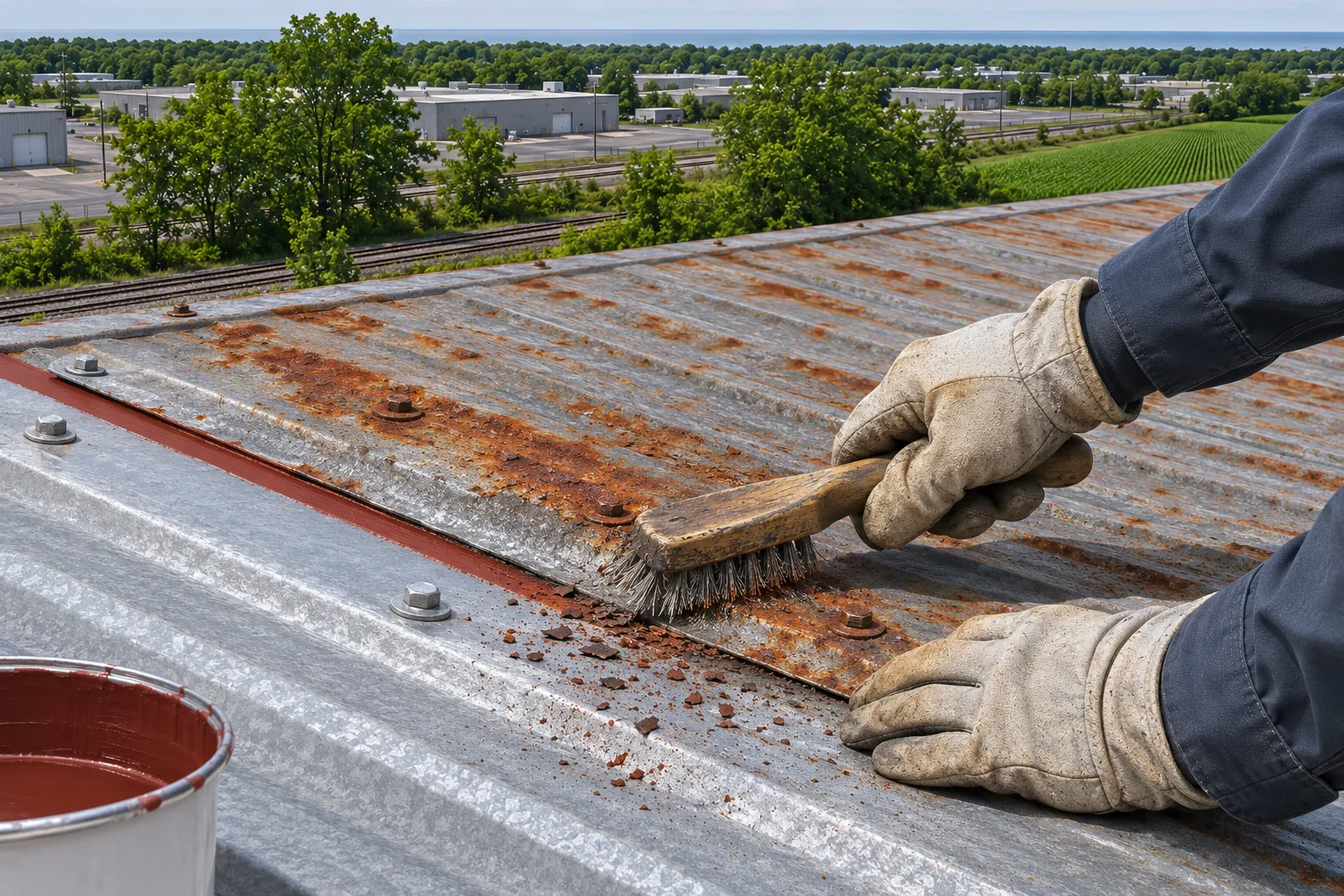
Meltwater sits longest at the low edge and where panels overlap, so rust starts there. Loose scale is wire-brushed off and the bare steel gets a rust-inhibiting primer.
Lake-effect snow melts by day and refreezes at night, packing gutters with ice. Backed-up meltwater then climbs under panel ends, so gutter joints and panel ends get checked on every walk.
Rooftop units, exhaust fans, and pipe penetrations break the panel field, and their flashing cracks long before the metal fails. We rebuild that flashing so the coating ties into sound details.
Summer storms can dent panels and crack old coating at the ribs. Dents alone rarely leak, but a split at a seam or fastener does, so impact areas get a close look.
Five steps, in this order, on every roof we coat. Repairs always come before the first coat.
We walk the roof panel by panel, marking loose screws, lifted laps, rust, and cracked flashing. Gutters, drains, and the inside of the building are checked too, so a condensation drip is never mistaken for a roof leak.
Failed screws are replaced, laps are fastened down, and flashing at curbs, walls, and vents is rebuilt. Any panel rusted through gets cut out and replaced with matching metal.
Panels are washed to remove dirt, chalk, and oil. Rusted areas are brushed to firm steel and primed, and the roof dries completely before the next step.
Every screw head, lap, and penetration gets a sealant or reinforced seam treatment. These details carry most of the leak risk, so they get their own pass.
Base and top coats go on at the thickness the product sheet calls for, timed around temperature and the forecast. We check thickness as we go and finish edges and details by hand.
A coated roof helps different people in different ways. Here is how the work reaches each of them.
Call and tell us where the water appears. We will walk the roof and trace it to the seam, screw, or gutter letting it in.
We coat five kinds of commercial roofs. Each column lines up the same three facts, so you can compare them at a glance.
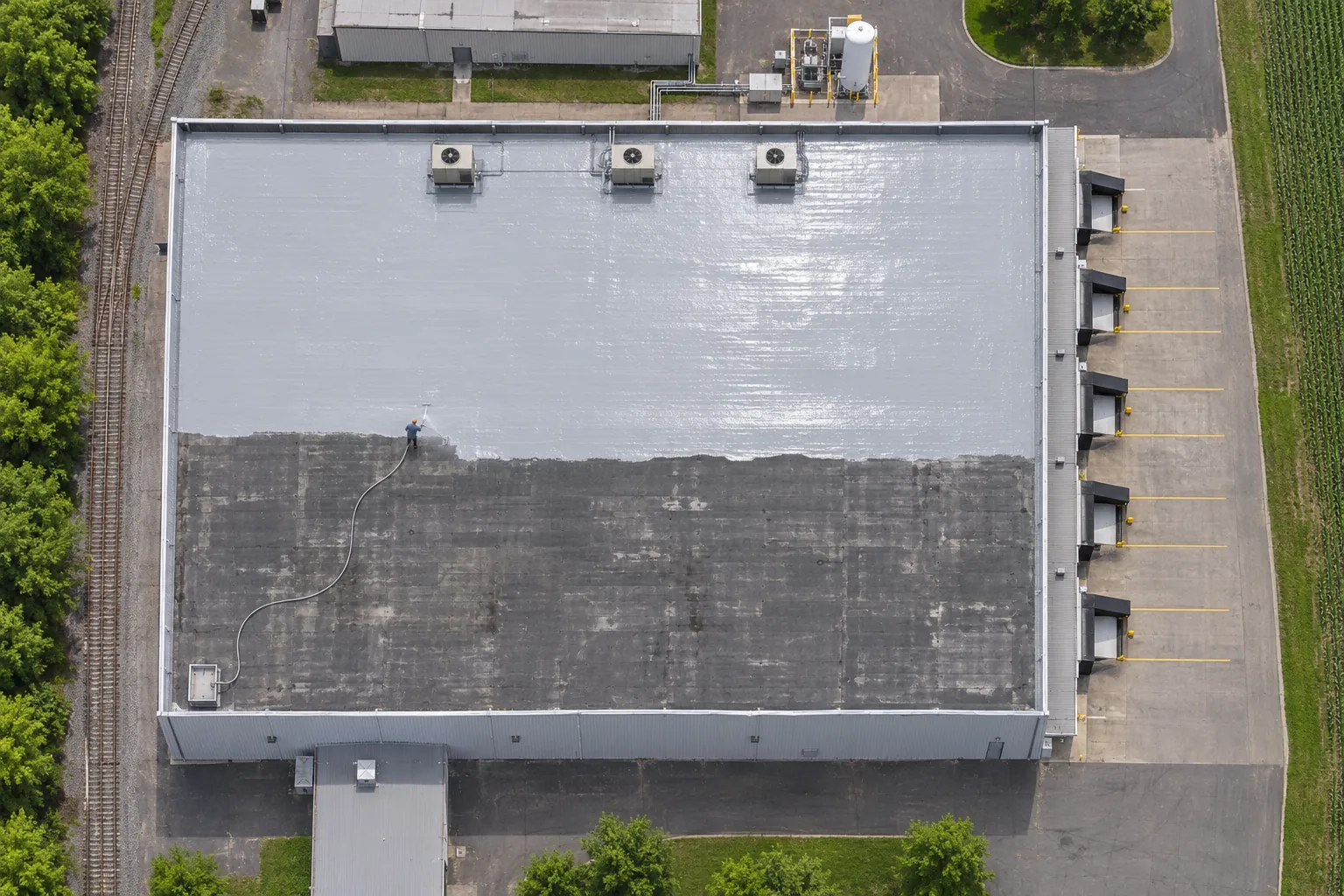
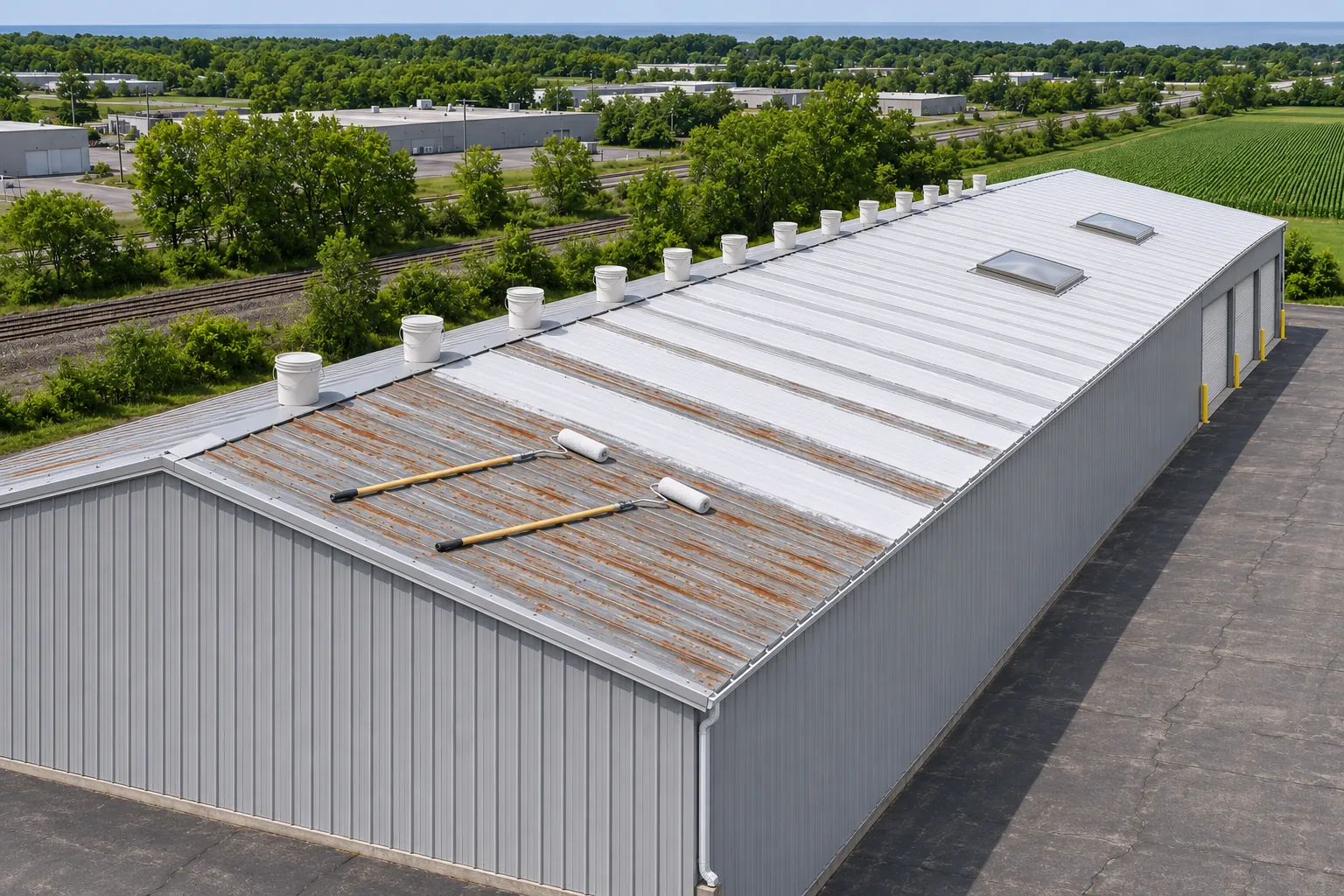
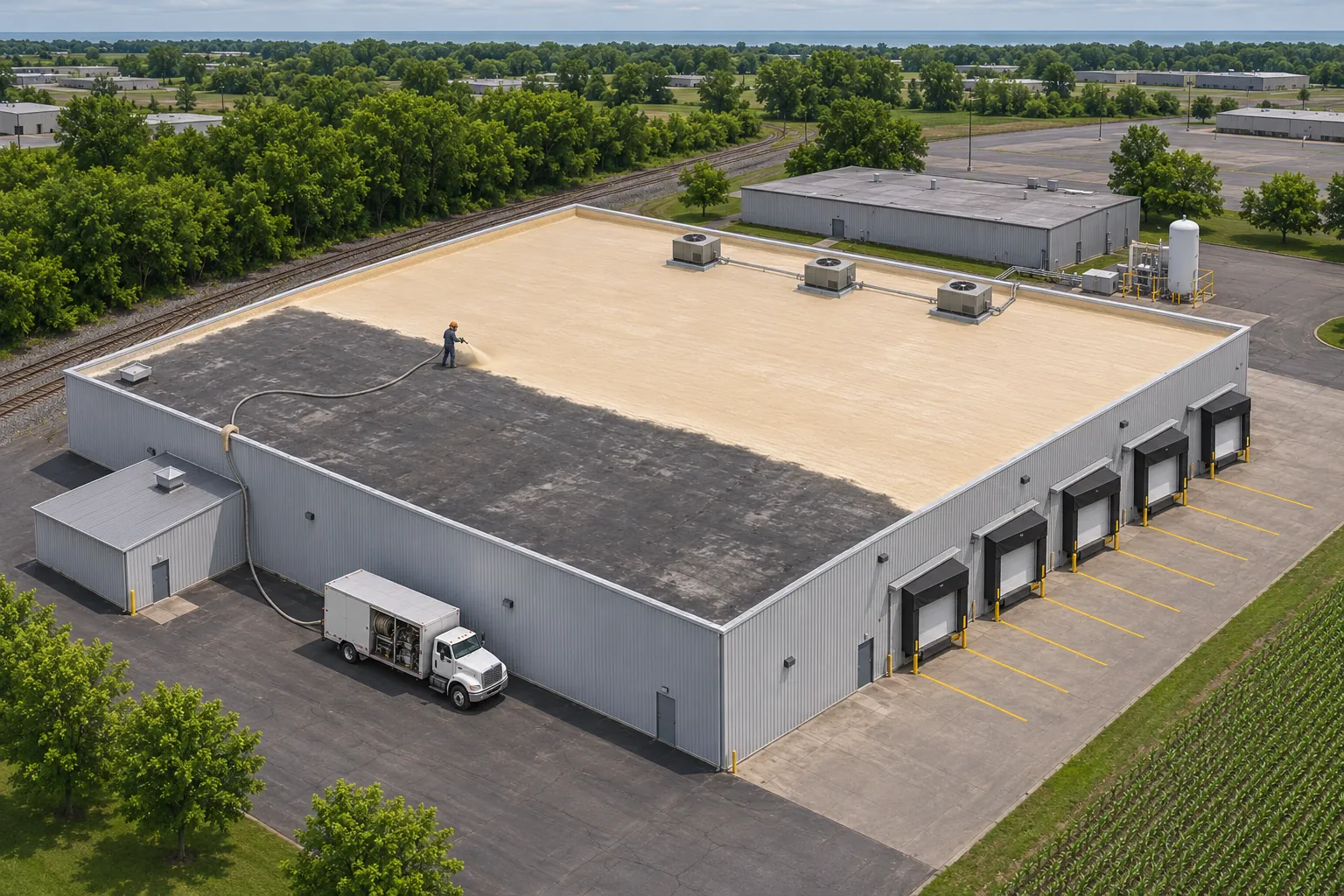
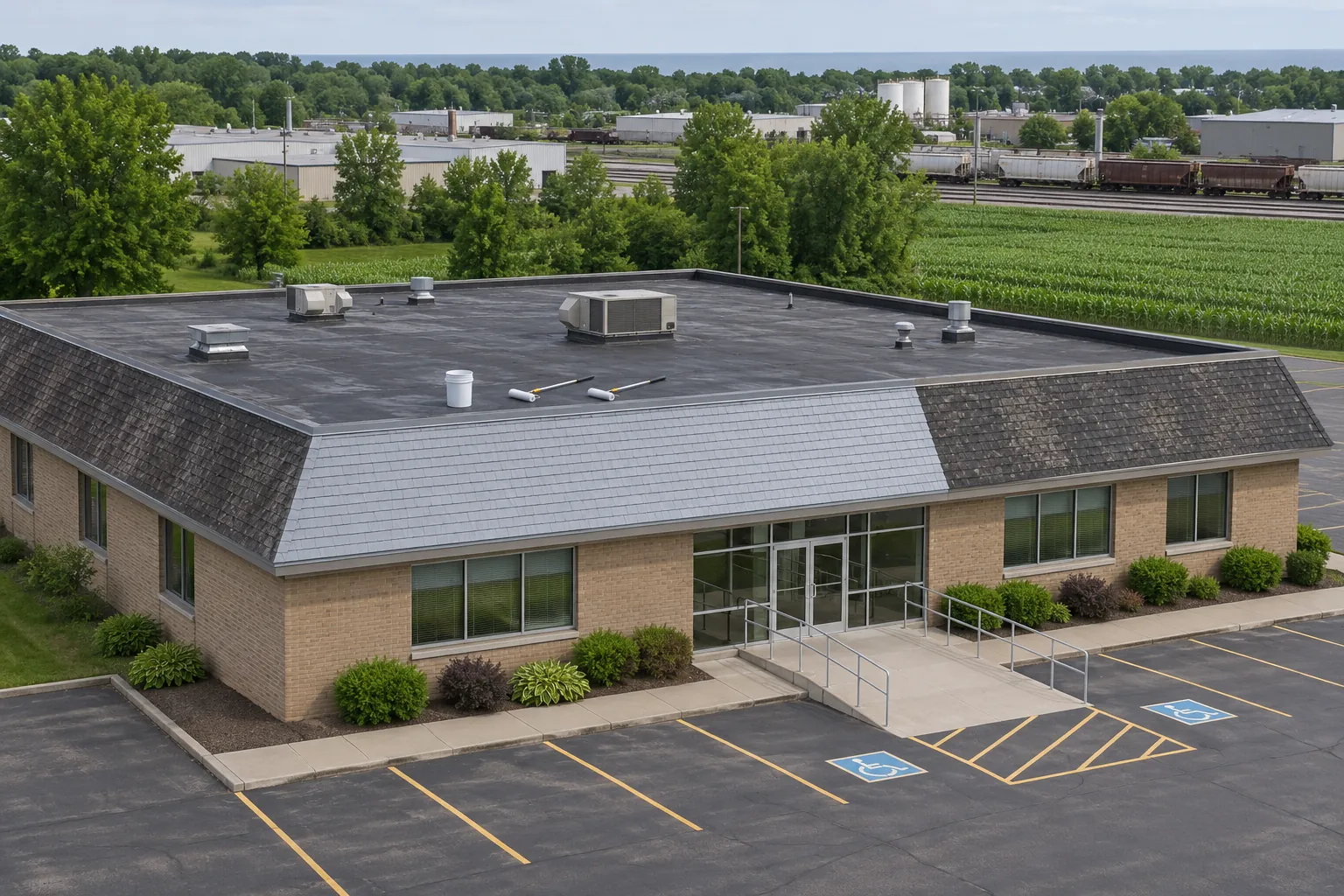
Most roofs fall into one of these three columns after the first walk. The first is the work we install.
We coat commercial metal roofs in Erie and the five towns below.
Outside these towns? Call us or send us a message.
Plastics plants here often carry process piping across the roof, so supports and flashing come first.
Older warehouses tend to have patch layers from past repairs that need sorting before any coat.
Plant roofs beside exhaust discharge collect deposits that need more than a wash.
Owners here schedule recoating from documented roof condition, section by section.
Warehouse drainage, from gutters to low corners, is checked before coating starts.
Plan on about $2.50 to $4.00 per square foot of roof for coating, against about $5 to $8 for replacement. Roof size, access, rust and seam preparation, fastener sealing, coating type and thickness, the number of coats, and the penetrations and flashing to rebuild all decide where a roof lands.
Warehouse roofs are wide and plain, which makes them good coating candidates. Most of the work sits at the laps, screws, skylights, and gutter lines. On a port warehouse we also plan around loading, vehicles, and outdoor stock so one dock stays open while a section above another dock is coated.
Exposed-fastener farm buildings coat well once the connections hold. Washers, seams, and interior moisture are checked first, because livestock and stored grain add humidity under the panels. Loose screws and damaged metal around them are fixed before the coating, which then covers repaired fasteners instead of hiding failed ones.
Recoat when inspection shows the topcoat wearing thin, chalking heavily, or losing adhesion, and before the metal underneath starts to rust again. Age alone says little. Sections near equipment and traffic paths wear first, so they often get a maintenance coat sooner than the open field.
Usually, yes. We set the order of sections around shifts, intakes, and loading so one area of the building is under work at a time. Fumes and overspray near air intakes are handled by rolling those areas and by shutting units down briefly when the owner agrees.
Repeated freezing and thawing finds weak details where water gets in or stays under the coating. A split usually traces back to a moving lap, poor adhesion, or a drainage problem. We repair that cause along with the coating damage, so the same spot stays sealed through the next winter.
Send the roof size for a free ballpark range, or call and we will set up a walk of your roof.