
Undersized or Sagging Gutters
Gutters that overflow in storms or pull away from the eave dump water against the wall and rot fascia. They are rehung, resized, or replaced first. Gutter size is checked against the roof area that drains into it.
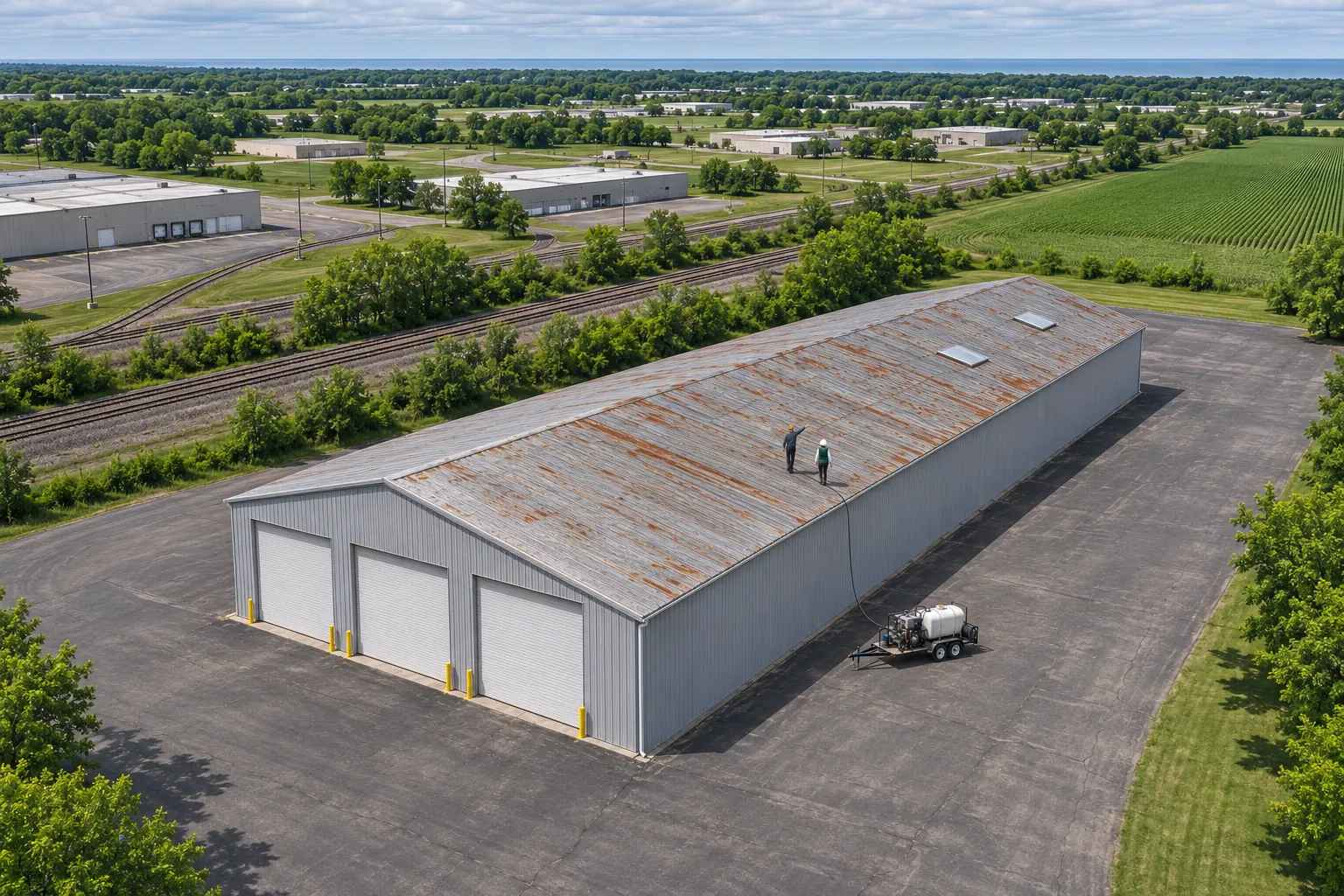
Franklin metal roof coating starts with where water goes. We examine gutters, outlets, and low areas, repair them, then coat the roof.
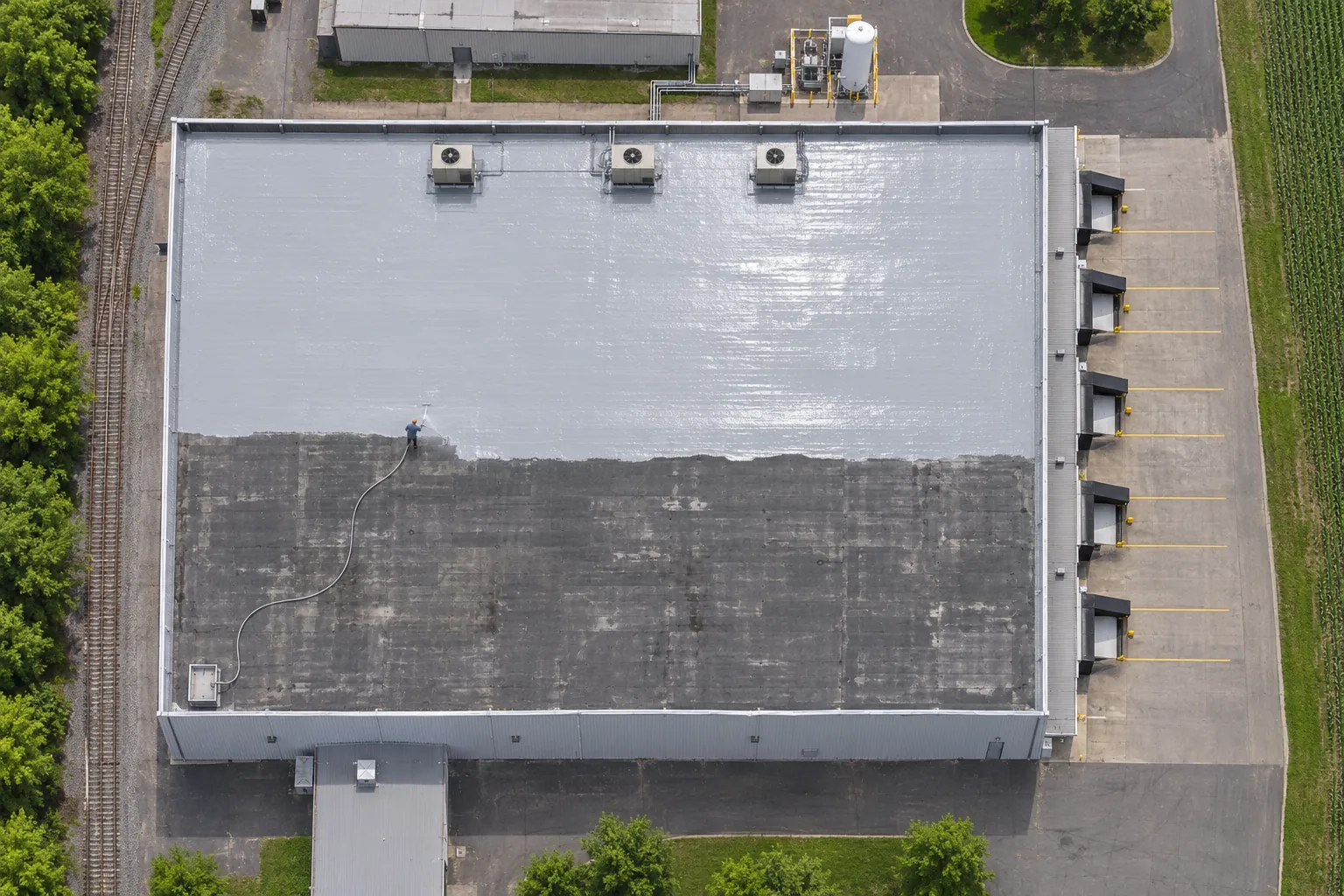
Franklin metal roof coating on warehouses works best once the water routes are known. Gutters, outlets, and low areas are examined before coating, so drainage problems become part of the preparation plan. We trace runoff across the roof and inspect seams and flashing near each outlet.
A blocked or defective water route left in place leaves new coating facing conditions nobody evaluated.
Six drainage problems come up most on Franklin warehouse roofs before coating.
Gutters that overflow in storms or pull away from the eave dump water against the wall and rot fascia. They are rehung, resized, or replaced first. Gutter size is checked against the roof area that drains into it.
Leaves and grit plug downspouts, and ice locks them in winter. Clearing and repairing outlets lets water leave before it sits on panels. Leaf guards or larger outlets help on buildings near tree lines.
Low spots at panel ends and corners rust first. We check the metal there and fix the slope or drainage before coating. Where slope cannot be corrected, a water-tolerant coating covers that corner.
Overflowing gutters soak the fascia and wall behind them. Damaged trim is repaired along with the gutter so water lands where it should.
Frozen downspouts back water onto the roof edge during thaws. Downspout size, routing, and heat exposure are checked to keep them flowing.
Seams closest to outlets carry the most water on the roof. They are fastened, sealed with reinforced seam treatment, and given extra coating build.
Fixing drainage before coating pays off for each group at a Franklin warehouse.
Franklin warehouse roofs usually get one of these, decided by how water leaves the roof.
| Option | Where It Fits | What To Know |
|---|---|---|
| Drainage repairs plus metal coating | Sloped panels with gutter problems | Gutters fixed before the coat |
| Silicone at slow-draining areas | Roofs with corners that hold water | Handles the water that remains |
| Outlet rebuild plus spot repairs | Roofs mostly in good shape | Fixes the water route alone |
| Deck repair before coating | Sagging low areas | Structural issue handled first |
Call and tell us where the water goes. We will trace the runoff before planning any coating.
How drainage work and coating fit together on a Franklin roof.
We trace runoff from ridge to gutter, examine outlets and low areas, and inspect seams and flashing nearby. Rain or a hose test shows where water actually travels on the roof.
Gutters are rehung or replaced, outlets cleared or rebuilt, and downspouts reconnected so water leaves the roof. Hangers are spaced closer where heavy snow and ice load the gutter.
Rusted panel ends and seams near outlets are repaired, and any sagging deck is flagged for structural work. Deck problems go to a structural contractor before coating is scheduled.
Panels are washed, rust is primed, and the roof dries fully before coating. Panel ends at the gutter line get extra brushing and primer.
Coating goes on with extra build at panel ends and outlets, where water still runs heaviest. Gutters are flushed once more after coating so the first storm drains cleanly.
Franklin is part of our area along with Erie and these towns.
Building elsewhere in the region? Call us or send us a message.
Plastics plants with process piping crossing the roof.
Old patch layers sorted out on warehouse roofs.
Plants where exhaust discharge wears the metal around it.
Recoating planned from inspection records on each section.
Have the gutters, outlets, and low areas examined first so drainage problems join the preparation plan. We trace runoff and inspect nearby seams and flashing, because a blocked or defective water route leaves the new coating exposed to conditions nobody evaluated.
Coating runs about $2.50 to $4.00 per square foot of roof, against about $5 to $8 for replacement. Gutter replacement, outlet rebuilds, and repairs at low corners decide where a warehouse lands in that range.
Call with the building address and we will confirm coverage and book a roof walk. Franklin is about 50 miles from Erie in a straight line.
We cover Franklin, nearby Oil City, and Erie, Meadville, Warren, and Corry. Warehouse roofs here start with a drainage check.
Coating protects the surface; it leaves the water where it is. Standing water is fixed with drainage repairs, and a water-tolerant coating such as silicone handles any slow areas that remain.
Ice dams start with drainage and heat loss. Clearing and sizing gutters and downspouts helps most; coating then protects the panel ends where meltwater still runs.
It concentrates water on one spot of the lower roof, which wears coating and rusts metal there. We extend or reroute those downspouts as part of the drainage work.
Surface rust gets brushed and primed. Panel ends rusted through are cut back and replaced, or covered with a new edge piece, before coating.
Send the roof size for a free ballpark range, or call to have the drainage checked first.