
Residue Around Stacks
Oily or chalky deposits build up downwind of discharge points. They are cleaned and tested, since residue left on the panel keeps any coating from bonding. Samples help pick a cleaner that lifts the residue fully.
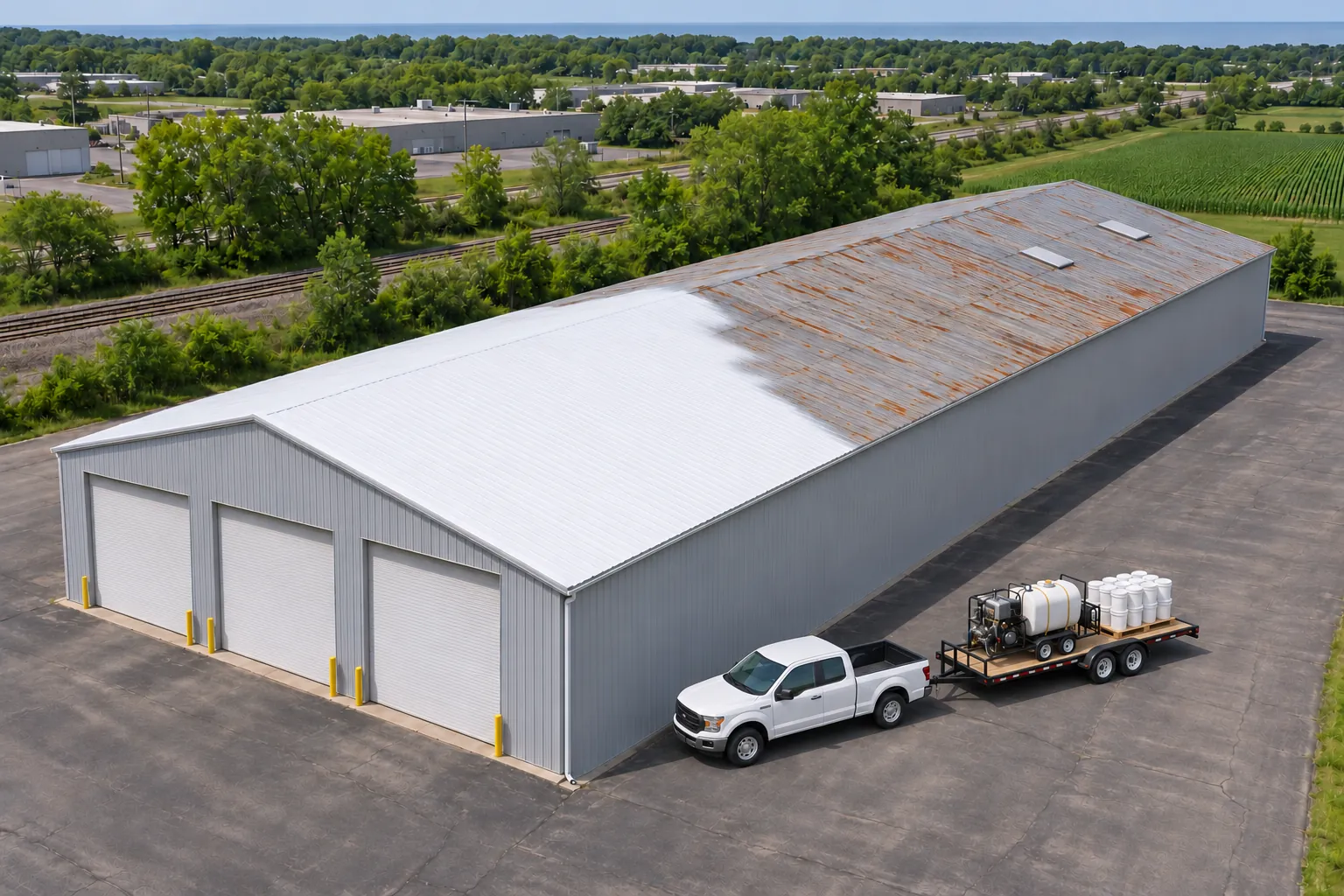
Warren metal roof coating near exhaust stacks starts with the deposits. We inspect the metal, review the exposure, and choose a coating that suits it.
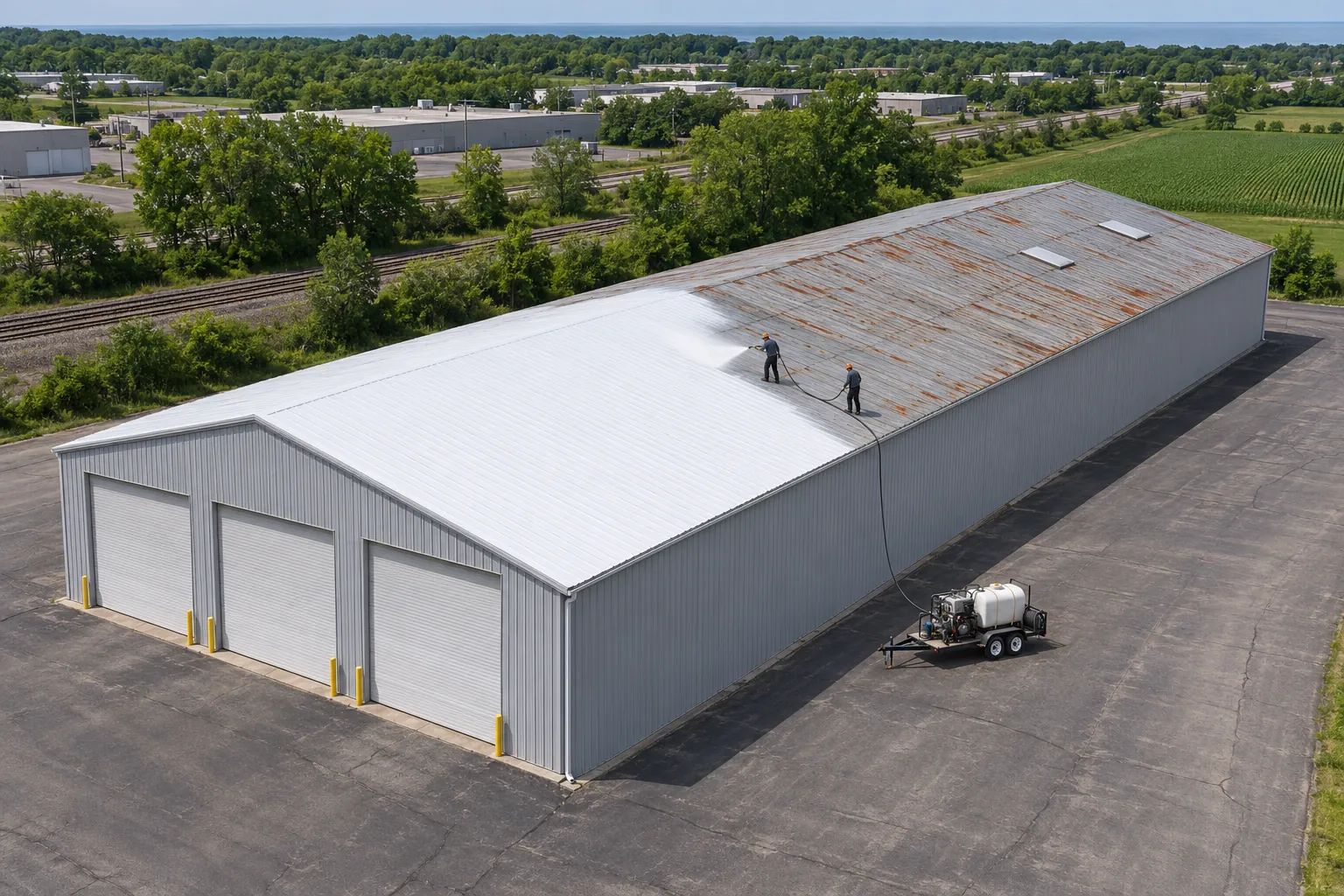
Warren metal roof coating on plant roofs often runs into exhaust discharge. Deposits, surface damage, and tight access around stacks complicate the work. We inspect the affected metal and review whether the ongoing exposure suits the proposed system.
Preparation there can take more than cleaning, and some equipment changes are worth making first, so the restored surface avoids the same damage.
Discharge marks a roof in six predictable ways. These come first on Warren plant roofs.
Oily or chalky deposits build up downwind of discharge points. They are cleaned and tested, since residue left on the panel keeps any coating from bonding. Samples help pick a cleaner that lifts the residue fully.
Some discharge pits panels faster than weather does. Pitted areas are brushed, primed, or replaced depending on how deep the damage runs.
Short stacks and fans that blow straight onto the roof keep wearing the same spot. We point those out so the owner can raise or redirect them.
Fan curbs take discharge, heat, and vibration all at once. Their flashing is rebuilt with materials suited to that exposure before coating.
Hot stacks soften some coatings near their base. Clearances are checked and a heat-rated product goes on in that ring.
Discharge residue washes into gutters and settles there. Gutters are cleaned and checked for corrosion along with the panels.
Dealing with exhaust before coating changes things for each group at a Warren plant.
These are the approaches we compare for Warren plant roofs with exhaust exposure.
| Option | Where It Fits | What To Know |
|---|---|---|
| Exposure-rated metal coating | Panels downwind of discharge | Product chosen for the residue type |
| Extra coat at stack zones | Roofs with local wear spots | Heavier build where discharge lands |
| Panel replacement plus coating | Metal pitted through | Replaced before the coat |
| Stack or fan changes first | Equipment aimed at the roof | Owner and equipment contractor decide |
Call and tell us what the discharge leaves behind. We will check the metal and the exposure before recommending a coating.
How a plant roof with discharge exposure gets prepared and coated.
Panels downwind of every stack and fan are inspected, deposits are tested, and we note how the equipment discharges onto the roof. Notes record which units run most hours and blow onto the roof.
Discharge is compared with the coating options, and equipment changes worth making before coating are flagged. Those changes are listed in writing for the owner and the equipment contractor.
Residue is cleaned off, pitted metal is primed or replaced, and curbs around equipment are reflashed. Washing water near stacks is collected where the residue calls for it.
Prepared areas get the primer the coating system calls for, with extra attention near discharge points. Bare metal near discharge points is primed right after it is cleaned, before residue can settle again.
The roof is coated, with added thickness where discharge lands, and equipment shut down while work is close. Thickness at stack zones is recorded separately for future checks.
Warren is one stop in our area, which also covers Erie and these towns.
Somewhere else? Call us or send us a message.
Plastics plants with process piping crossing the roof.
Old patch layers sorted out on warehouse roofs.
Recoating planned from inspection records on each section.
Gutters, outlets, and low spots checked first on warehouses.
Deposits, surface damage, and restricted access. We inspect the affected metal and review whether the ongoing exposure suits the coating. Preparation there goes past cleaning, and equipment changes are sometimes needed so the restored surface avoids the same damage.
Call with the building address and we will confirm coverage and arrange a roof walk. Warren sits about 50 miles from Erie in a straight line.
Our area covers Warren along with Erie, Corry, Meadville, Oil City, and Franklin. Plant roofs here get the same inspection, with extra time at exhaust points.
Coating runs about $2.50 to $4.00 per square foot of roof, against about $5 to $8 for replacement. Deposit removal, pitted panels, and extra coating at discharge zones move a plant roof within that range.
Mostly. Sections away from discharge are coated with the plant running, and equipment is shut down only while work is close to it, at times the owner sets.
Stack and fan changes go to the owner and their mechanical contractor. We point out which equipment is wearing the roof and work around their schedule before coating that area.
Residue returns as long as the equipment discharges onto the roof. Regular washing during inspections keeps it from building up, and raising the outlet reduces it at the source.
The areas around stacks, fans, and curbs come first, then gutters and laps for winter damage. Deposit buildup since the last visit is recorded so cleaning can be planned.
Send the roof size for a free ballpark range, or call to have the exhaust areas checked first.