
Topcoat Wearing Thin
Thickness readings drop fastest on exposed slopes and edges. A section reaching the product minimum gets cleaned and recoated before metal shows. Readings are taken at the same marked points every visit.
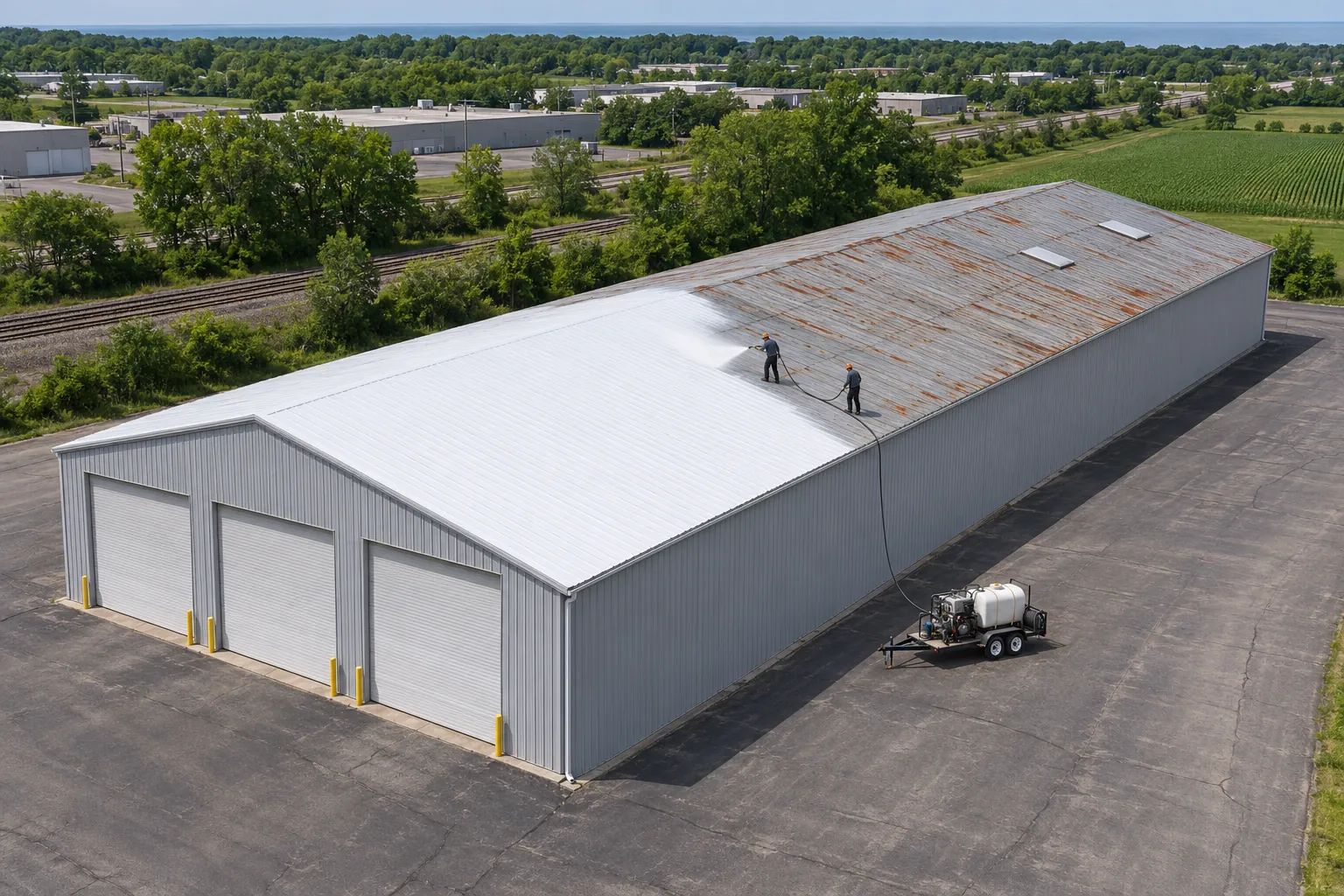
Corry metal roof coating can follow the roof condition. We document adhesion, wear, and metal at each inspection, then recoat sections when they need it.
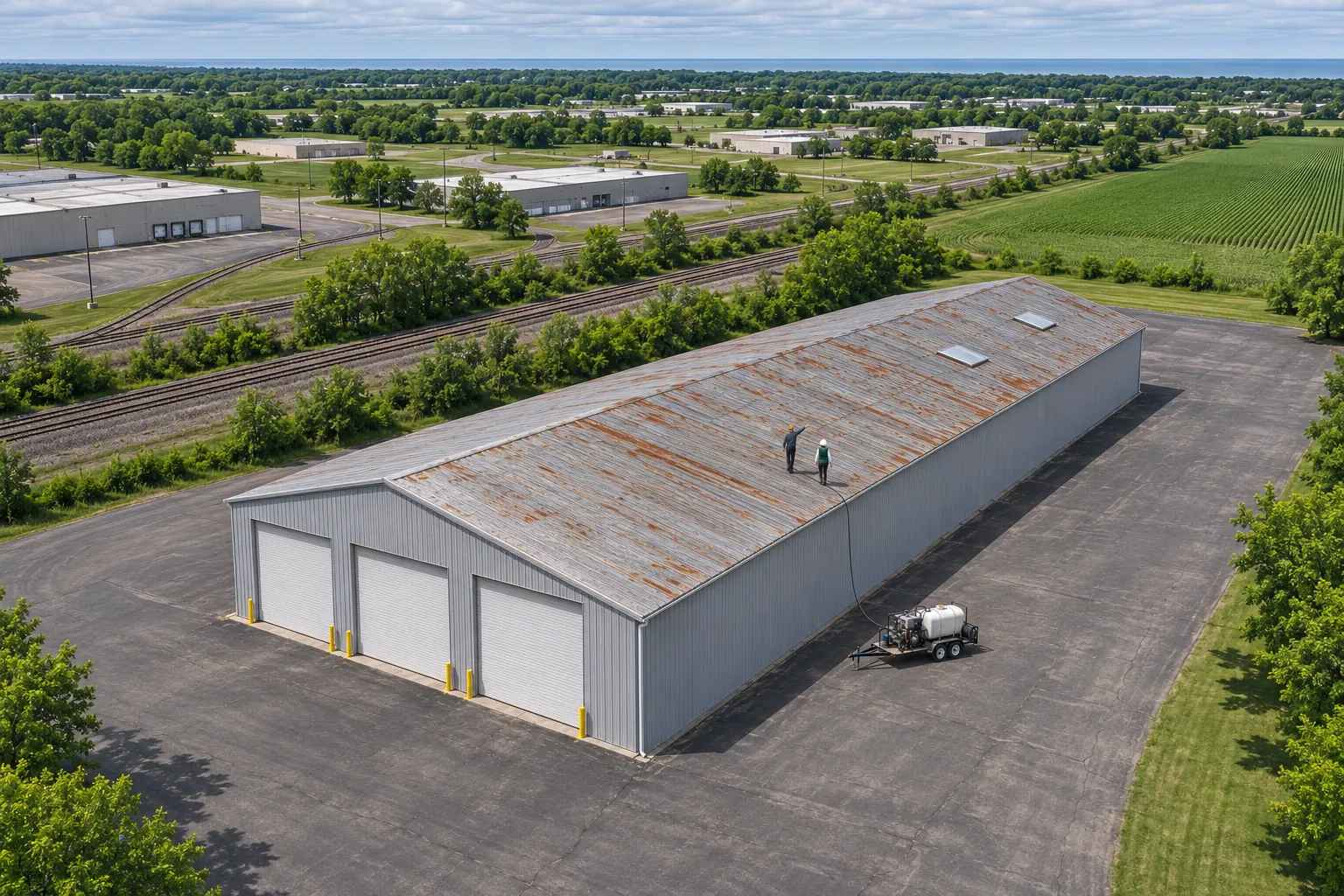
Corry metal roof coating does not have to follow a calendar. Owners here can plan recoating from documented condition, including adhesion, wear, and the state of the metal underneath. We compare inspection findings over time to see whether a section needs local repairs or broader renewal.
Age stays useful background, yet sections facing weather, equipment, or traffic wear at different rates.
These six signs tell us when a Corry roof section is ready for a recoat.
Thickness readings drop fastest on exposed slopes and edges. A section reaching the product minimum gets cleaned and recoated before metal shows. Readings are taken at the same marked points every visit.
Pull tests and peel checks show where the coating is letting go. Those spots get scraped back and spot-primed ahead of the recoat. Peeling found early stays a small repair instead of a full section.
Paths to units and hatches lose coating long before the open field. Walk pads and a maintenance coat there keep the rest of the roof on schedule. Thicker pads go down where carts or ladders are set on the roof.
Orange spots at laps show the coating has worn through to the steel. Those spots are brushed, primed, and recoated before rust spreads under the film.
Fine cracks over seams show movement the coating can no longer follow. The seam is reinforced with fabric before that section is recoated.
Ice in gutters pries at their joints and the panel ends above. Spring inspections check both, and any loose hangers or split joints are fixed before a recoat is planned.
Condition-based recoating helps each group tied to a Corry building.
What a Corry roof section gets depends on what the inspection records show.
| Option | Where It Fits | What To Know |
|---|---|---|
| Spot repairs and touch-ups | Sections with small worn areas | Fixes wear before it spreads |
| Maintenance recoat by section | Topcoat thin but adhering | Cleaned and recoated in place |
| Full recoat | Wear across most sections | Same family as the existing coating |
| Repair then recoat | Metal showing or seams opening | Metal and seams fixed first |
Call and tell us when it was last coated. We will look at adhesion, wear, and the metal before suggesting anything.
How condition-based recoating works on a Corry roof.
We check adhesion, coating thickness, wear at paths and edges, and the metal at laps and fasteners, section by section. Each section gets a label so readings line up visit after visit.
New readings are set beside earlier ones, showing which sections are wearing faster and why. Sections wearing faster are checked for nearby equipment or traffic causes.
Small worn spots, loose screws, and lifted seams are fixed on their own where the rest of the roof holds up. Spot repairs use the same product family as the existing coating.
Sections due for renewal are washed, loose coating is removed, and any exposed metal is primed. Edges of sound coating around worn spots are feathered for a clean tie-in.
Each recoated section is measured and logged, setting the baseline for the next inspection. The log notes product, batch, weather, and thickness for each section.
Corry is part of our regular area with Erie and the towns below.
Building outside these? Call us or send us a message.
Plastics plants with process piping crossing the roof.
Old patch layers sorted out on warehouse roofs.
Plants where exhaust discharge wears the metal around it.
Gutters, outlets, and low spots checked first on warehouses.
Yes. Recoating decisions can rest on documented condition, including adhesion, wear, and the metal underneath. We compare findings over time to see whether local repairs or broader renewal fits, since age alone says little about a single section.
Corry is the closest of our towns to Erie, about 25 miles in a straight line. We coat roofs here and in Warren, Meadville, Oil City, and Franklin.
Full coating runs about $2.50 to $4.00 per square foot of roof, against about $5 to $8 for replacement. Recoating one section at a time spreads that cost across years as each one needs it.
Manufacturing buildings, warehouses, and shops make up most of the Corry roofs we see. Each gets a condition record that guides later work.
Spring and fall checks catch winter damage and summer wear. After heavy hail or a hard winter, an extra walk is worth it.
A gauge measures coating thickness at marked points on each section. Comparing those points between visits shows where the coating is wearing faster than the rest.
Earlier records help, especially product names and dates. We add our own readings at the first visit so later comparisons start from known numbers.
A walk after a hailstorm is worthwhile. Dents rarely leak, but cracked coating at seams and fasteners does, and early spot repairs keep the section on its recoat schedule.
Send the roof size for a free ballpark range, or call to start a condition record for your roof.