
Ready for Foam
- Substrate
- Dry deck or firmly attached panels
- Moisture
- Dry where test cuts are taken
- Insulation Need
- Building wants more insulation
- Nearby Equipment
- Intakes that can be protected
- Indoor Humidity
- Moisture sources understood
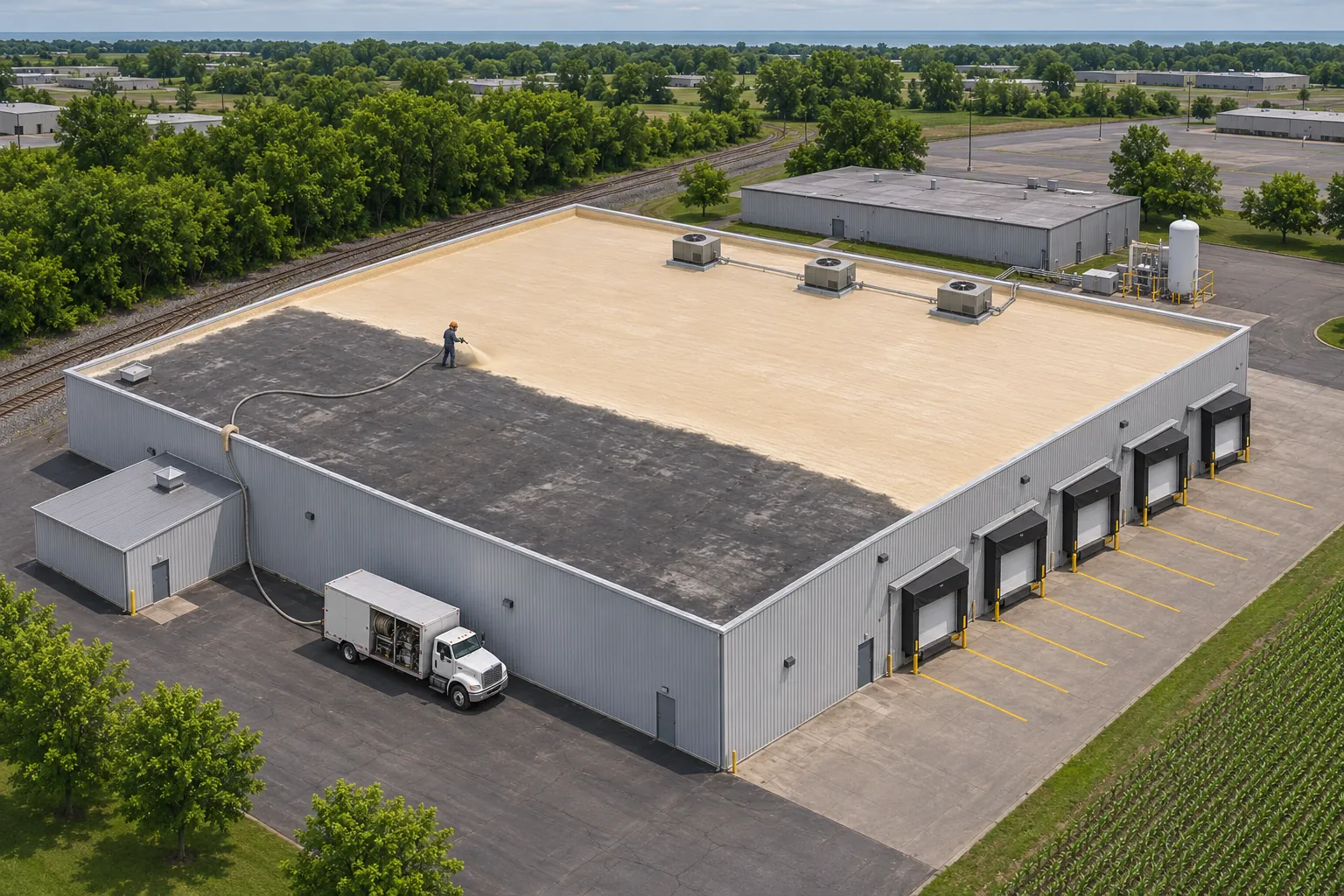
Erie spray foam roofing adds insulation and one continuous surface. We repair leaks and wet materials first, then spray foam and a topcoat.
Erie spray foam roofing fits a dry, firmly attached roof that would benefit from insulation. The raised column shows that roof.
Foam follows the shape of the roof, so the roof under it has to be right before spraying starts.
Retained metal panels can take foam when attachment, corrosion, and moisture check out. Panel and seam repairs are resolved first, since foam follows damaged metal as easily as solid metal.
Added insulation helps, yet winter dampness in plants often comes from indoor humidity meeting cold surfaces. We assess the whole assembly before promising foam will fix it.
Test cuts come first, because spraying over soaked insulation traps the water. Wet areas are removed and replaced with dry material before any foam.
Overspray travels on wind. Intakes are covered or units shut down briefly, and spraying near equipment waits for calm conditions.
Leaking joints need investigation and repair that foam cannot replace. Those joints are opened, dried, and sealed before spraying.
Sunlight breaks down bare foam. A protective topcoat goes over it, with extra thickness where crews walk to equipment.
Foam roofs differ mostly in what sits under the foam and what goes on top.
| Option | Where It Fits | What To Know |
|---|---|---|
| Foam over retained metal panels | Firmly attached, dry panels | Panel and seam repairs come first |
| Foam over an existing flat roof | Dry membrane or built-up roofs | Wet areas are cut out before spraying |
| Foam with silicone topcoat | Roofs with slow-draining spots | Silicone handles lingering water |
| Foam with acrylic topcoat | Well-drained foam roofs | Easy recoat in later years |
A foam roof changes things for the owner, the facility team, and everyone working under it.
Call before anyone sprays over it. We will find the wet areas and plan their removal ahead of any foam.
Five steps, beginning with moisture and ending with the topcoat.
Attachment, corrosion, and moisture are checked across the roof, with test cuts in suspect spots and a look inside at humidity and cold surfaces. Readings from a moisture meter guide where test cuts are taken.
Soaked insulation and failed patches are cut out, leaking joints are opened and sealed, and the deck is dried. New insulation board fills any area where wet material came out.
Units and intakes are covered or shut down with the owner, edges are masked, and wind is checked before spraying. A spotter watches wind direction and pauses spraying when it shifts toward intakes.
Foam is sprayed in passes to the specified depth, with extra build-up toward outlets where slope helps drainage. Probe checks confirm depth across the field and at the edges.
A silicone or acrylic topcoat goes over the foam within the window the product allows, with extra thickness on walk paths. Granules can be broadcast into the topcoat on paths for extra grip.
Some roofs need a coating without foam. These are the other systems we install.
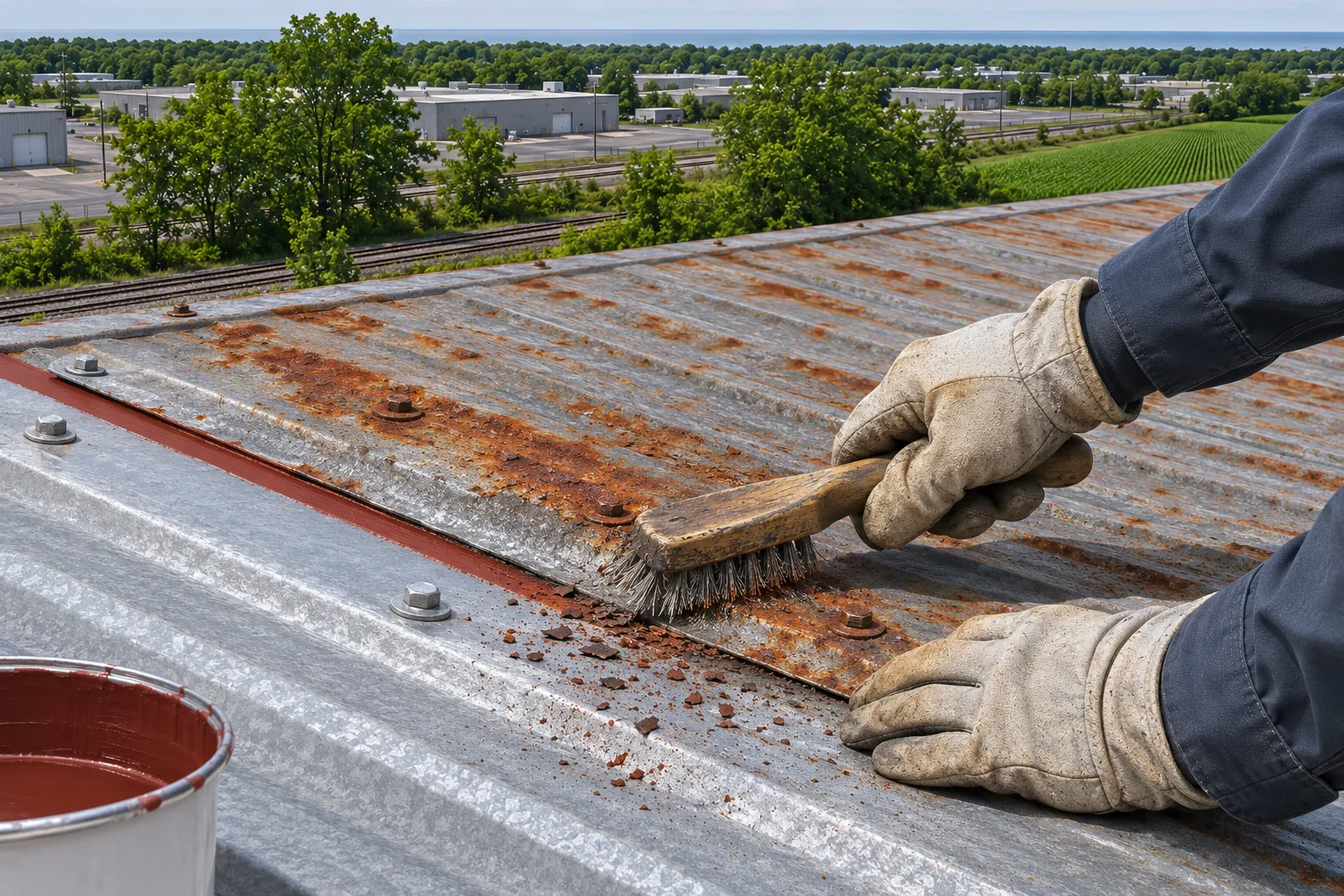
Screw sealing, lap repair, and rust priming under two coats.
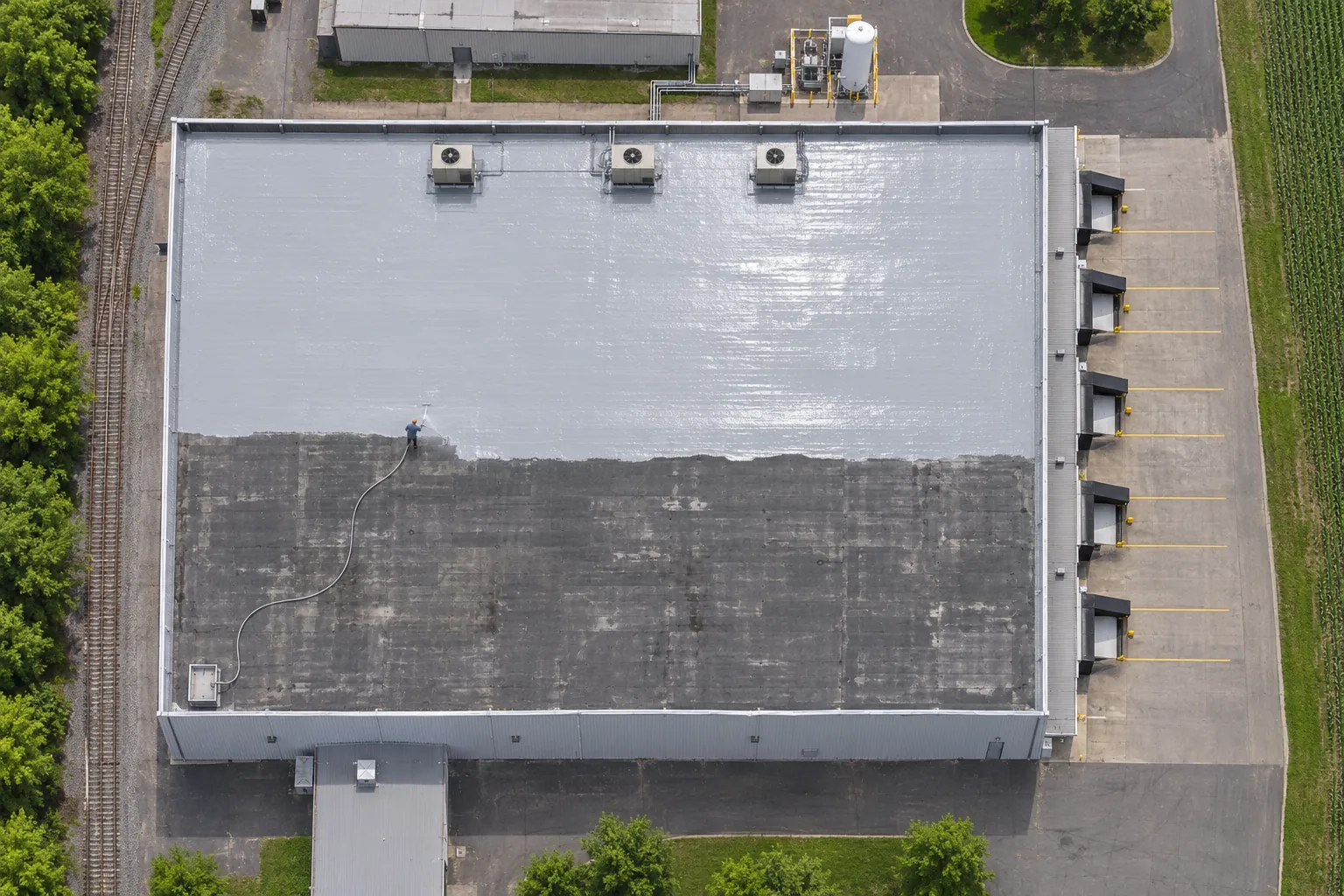
Thick silicone for low-slope roofs where water lingers.
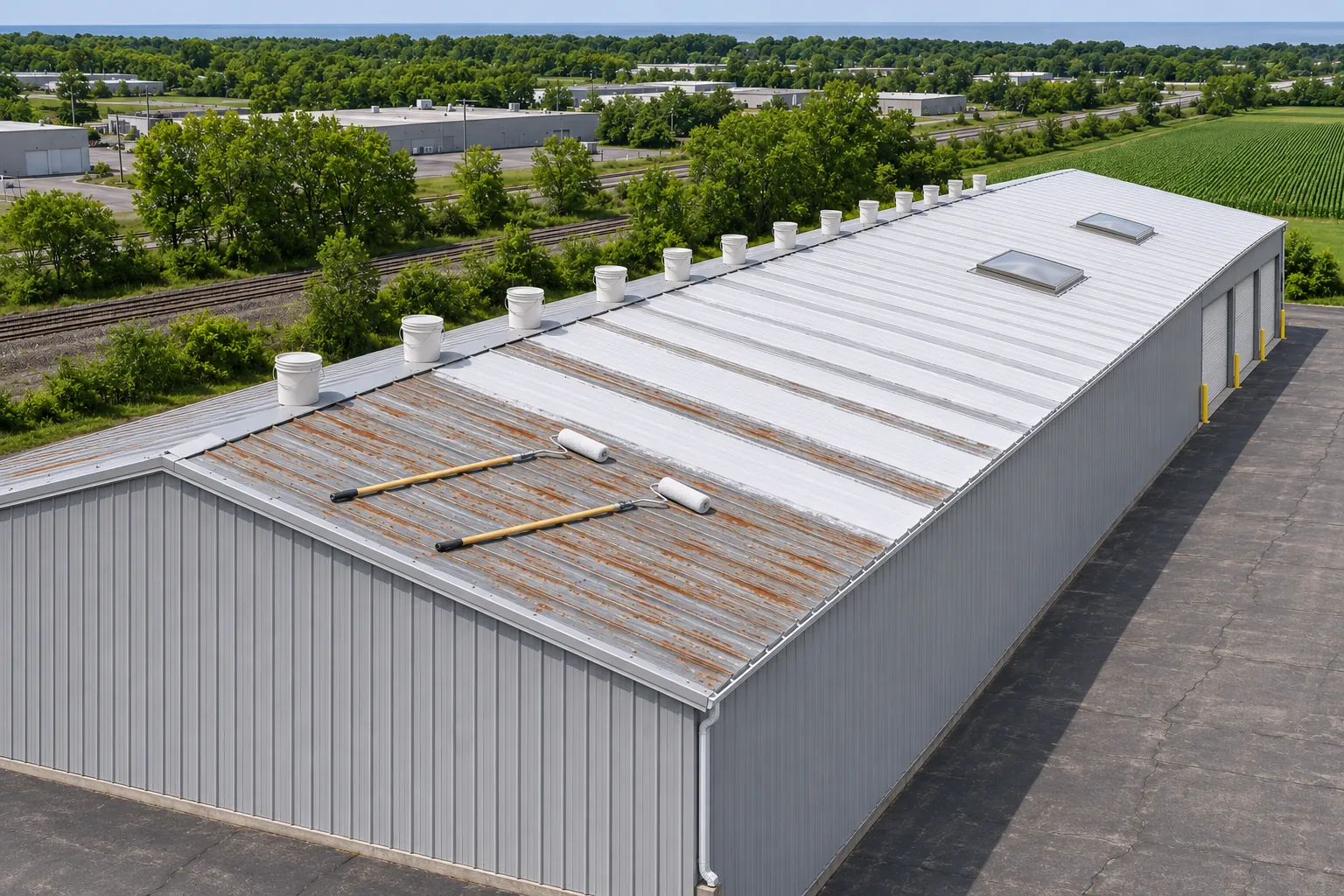
Water-based coats for sloped panels in warm, dry weather.
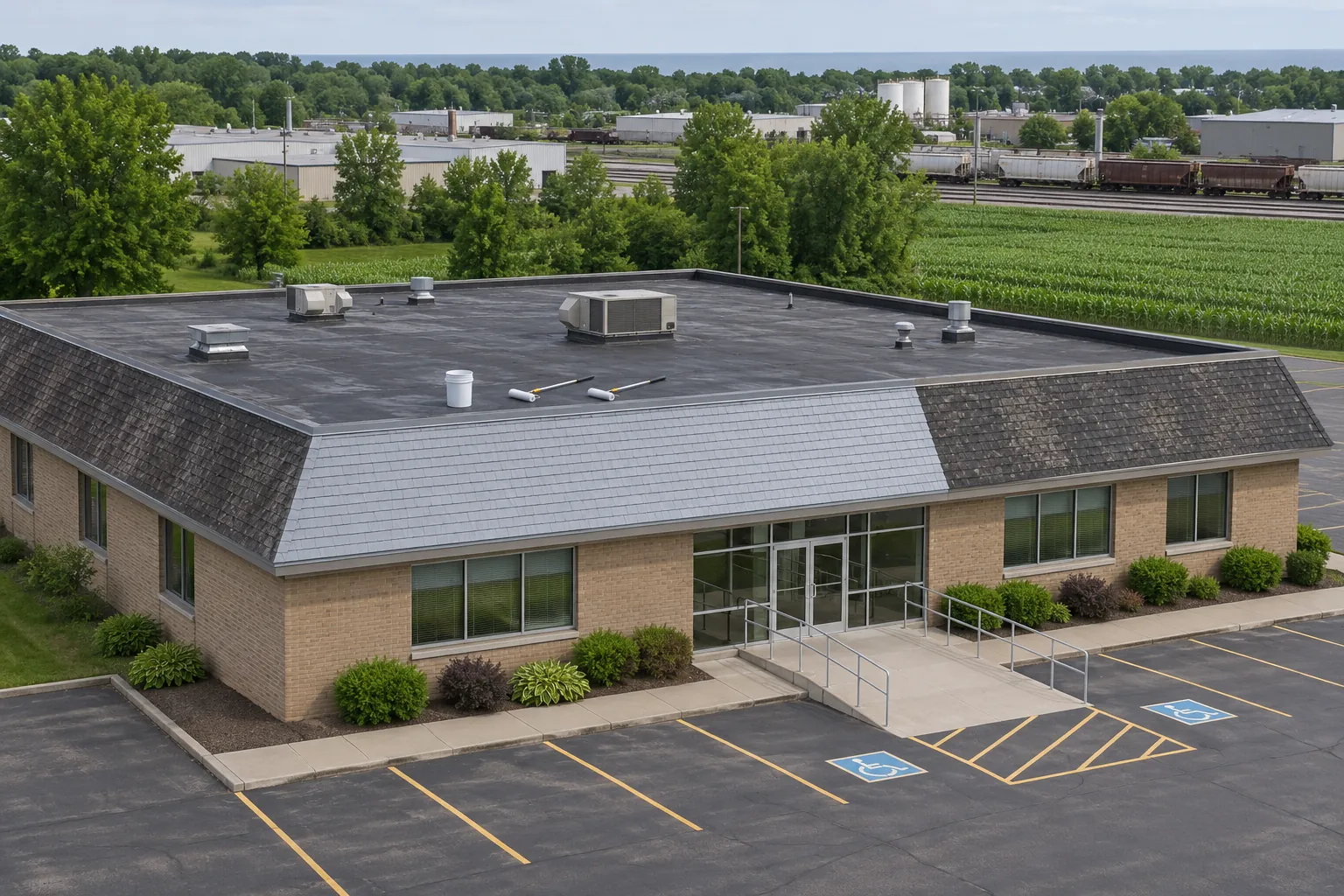
Coating flat, attached commercial shingles both makers approve.
For comparison, coatings run about $2.50 to $4.00 per square foot of roof and replacement about $5 to $8. Foam adds its own variables: foam depth and substrate work, plus roof size, access, seam prep, penetrations, and flashing.
Only once the leaks are repaired. Leaking joints and wet materials are investigated and fixed before foam goes on, because foam over an active leak hides it instead of stopping it.
Yes, when the panels are firmly attached and the system and preparation support it. We inspect attachment, corrosion, and moisture first, and resolve panel and seam repairs before any foam goes down.
Foam insulation alone often falls short, because condensation depends on the whole building air and moisture picture. We look at the existing assembly, indoor humidity, and cold surfaces, and recommend the roof work that fits those conditions.
Depth is set by the insulation the building needs and the slope it needs toward outlets. We measure as we spray and record the depth for later inspections.
The topcoat is the wearing surface. Inspections focus on paths near equipment and on any punctures, and the topcoat is renewed before the foam beneath is exposed.
Roofs with foam carry snow like any other roof of the same structure. The topcoat matters most here, because ice and shovels scuff it, so we check paths and edges after winter.
Spraying near people is planned like any other trade work: intakes are closed or covered, the area below is kept clear, and spraying waits for calm wind. Sections next to busy entrances are often sprayed when the building is quiet.
Send the roof size for a free ballpark range, or call to have moisture under the roof checked first.