
Ready for Acrylic
- Slope
- Sloped panels
- Drainage
- Water runs off within hours
- Shade and Moisture
- Mostly sunny, dries fast
- Season
- Late spring to early fall
- Future Upkeep
- Owner wants simple recoats
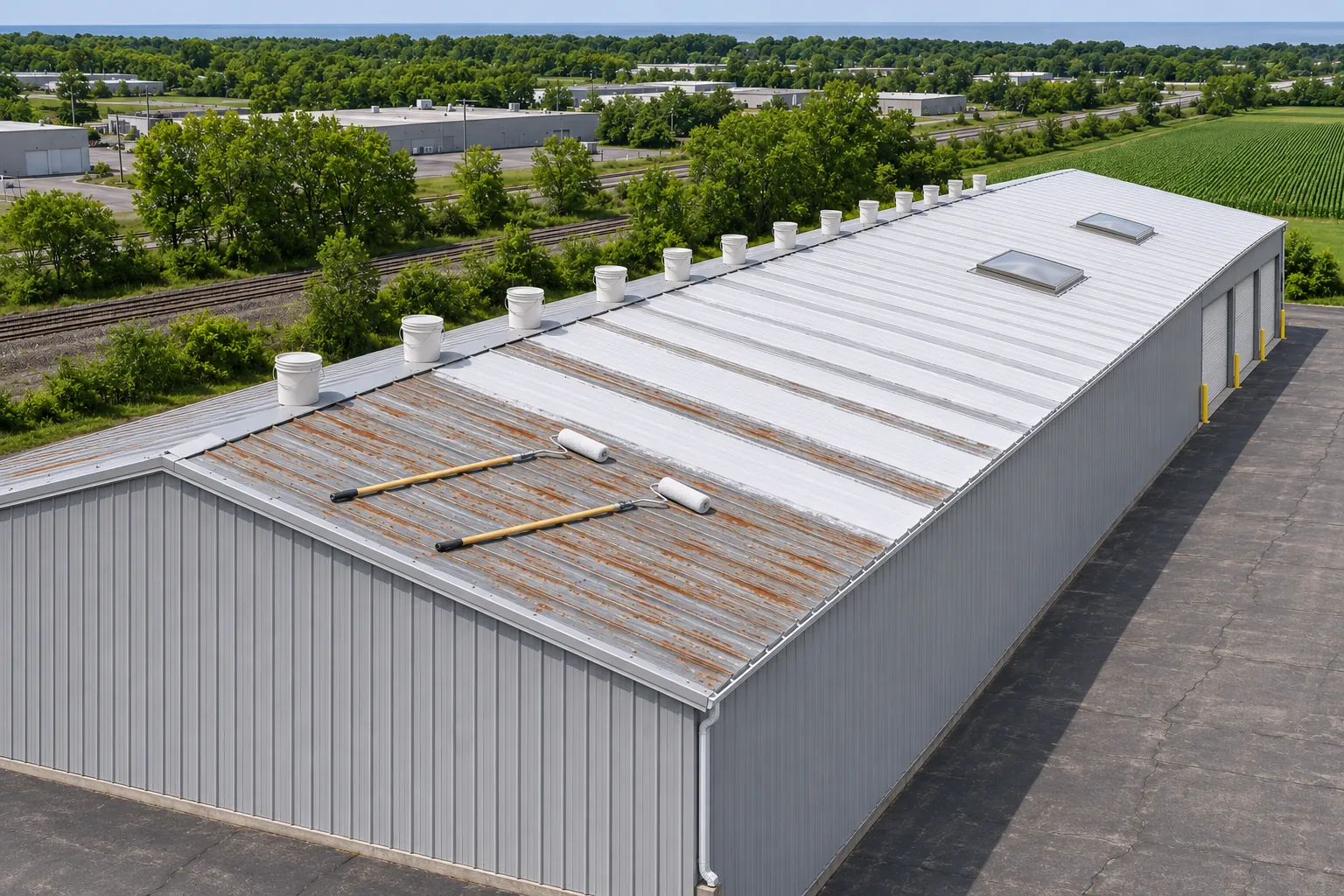
Erie acrylic roof coating fits sloped metal that sheds water fast. We schedule it for warm, dry stretches and reinforce the seams.
Erie acrylic roof coating suits roofs that drain well and can be coated in a dry, warm stretch. The raised column shows that roof.
Acrylic is water-based, so the roof and the weather both have to be ready.
Cure time depends on the product, temperature, humidity, and expected moisture. Shaded panels and detailed areas dry slower than open sections, so we plan around the slowest part.
Spring and fall days can be warm enough while nights drop below the product limit. We look at the roof surface and the forecast together before starting.
Panels move most at laps, ridges, and curbs, so acrylic needs reinforcement there. Polyester fabric is set into the base coat at each of those details.
Untreated rust stains through a light acrylic topcoat. Rusted areas are brushed and primed with a stain-blocking primer first.
Standing water softens acrylic over time. Gutters and outlets are cleared and checked so water leaves the roof quickly after storms and thaws.
Recoating is simple later on, since acrylic sticks well to itself. A worn topcoat can be cleaned and recoated with the same product family years from now.
These are the acrylic setups we use in Erie, chosen by roof condition and season.
| Option | Where It Fits | What To Know |
|---|---|---|
| Two-coat acrylic system | Sloped metal with light wear | Base and topcoat at measured thickness |
| Acrylic with stain-blocking primer | Panels with rust or old asphalt | Stops discoloration through the topcoat |
| Acrylic with fabric at seams | Roofs with moving laps | Fabric set into the base coat |
| Acrylic maintenance recoat | Older acrylic coatings | Cleaned and recoated over the old coat |
An acrylic-coated metal roof pays off for the owner, the people who look after it, and the people under it.
Acrylic needs warm, dry weeks, and they fill up. Call and we will plan the repairs now and the coating for the right window.
These five steps, timed so the coating dries in good weather.
We check panels, laps, screws, and gutters, note shaded sections, and decide whether acrylic or another system fits the slope and drainage. Shaded north slopes and areas under equipment are marked, since they dry last.
Failed screws, open laps, and cracked flashing are fixed. Rusted-through panels are replaced before any coating is planned. Any panel that flexes underfoot is fastened down before scheduling continues.
The application is booked when the forecast shows warm, dry days and nights above the product limit, through the full drying period. If the forecast turns, the start date moves rather than the drying time.
Panels are washed, rust is primed, and fabric is set into base coat at laps, ridges, and curbs. Fabric is pressed flat so no wrinkles hold water at the laps.
Base and topcoat go on in separate passes, each allowed to dry before the next, at the thickness the product requires. A wet-film gauge confirms each pass before the next goes on.
When the roof or the season calls for something else, these are the alternatives.
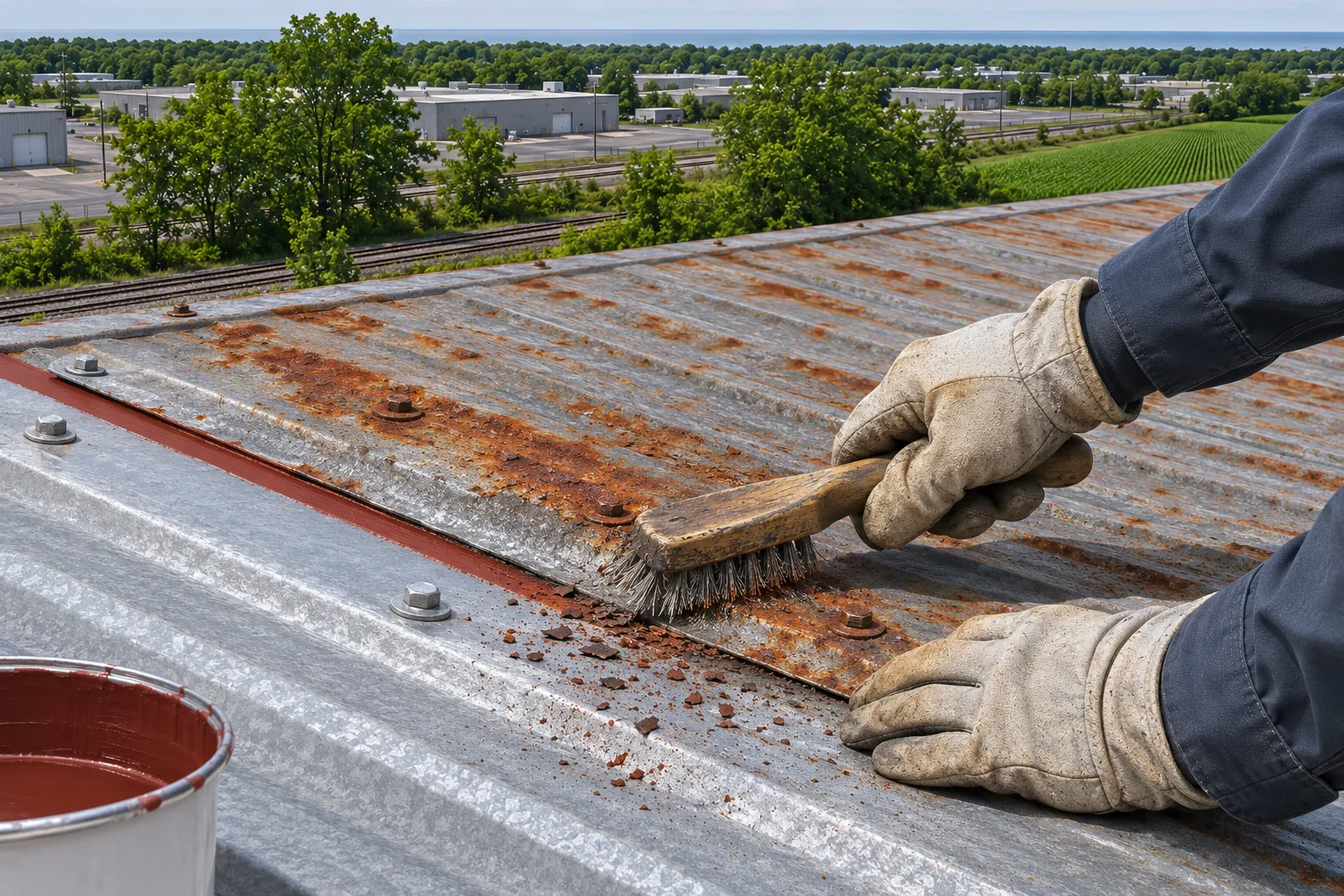
Screw sealing, lap repair, and rust priming under two coats.
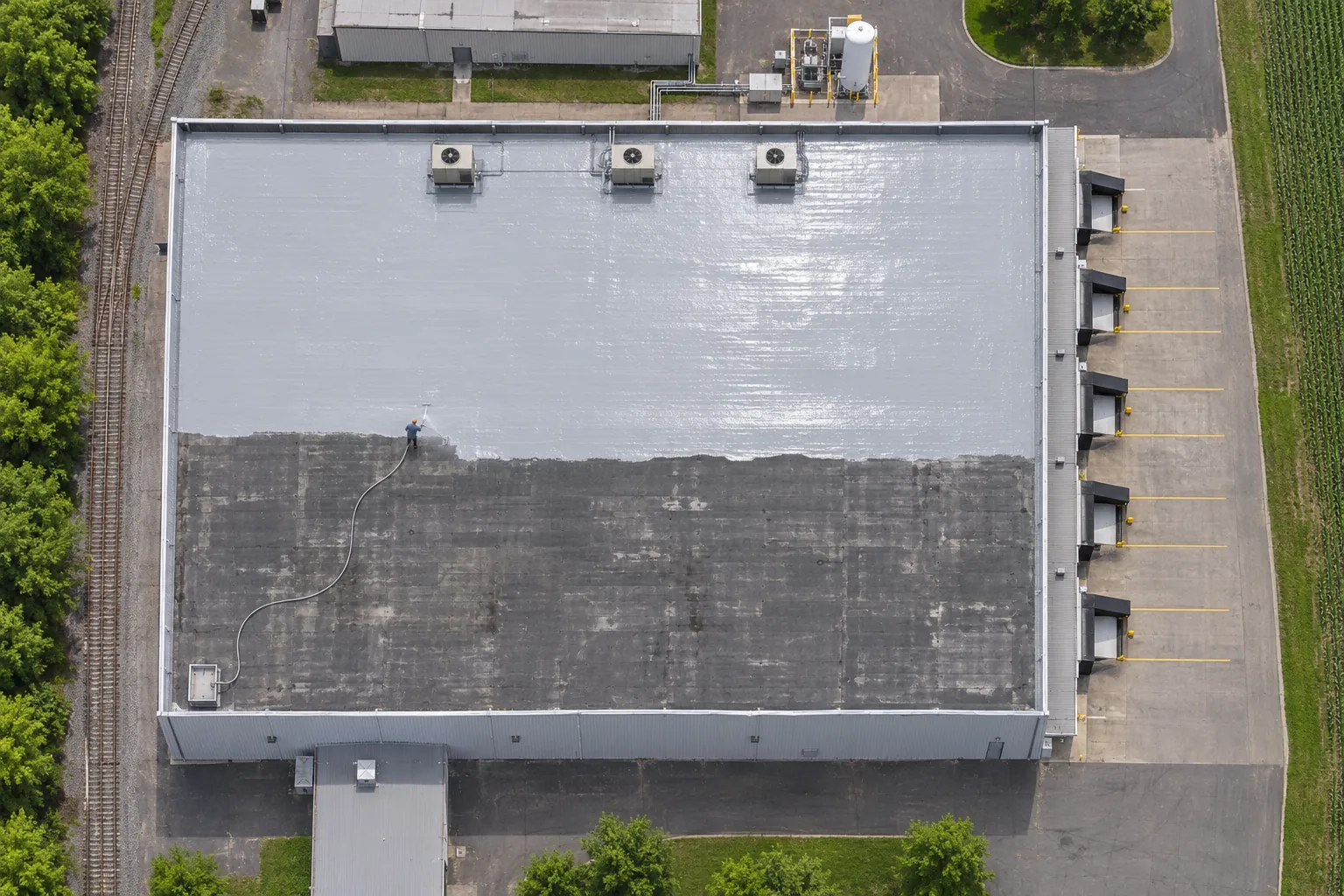
Thick silicone for low-slope roofs where water lingers.
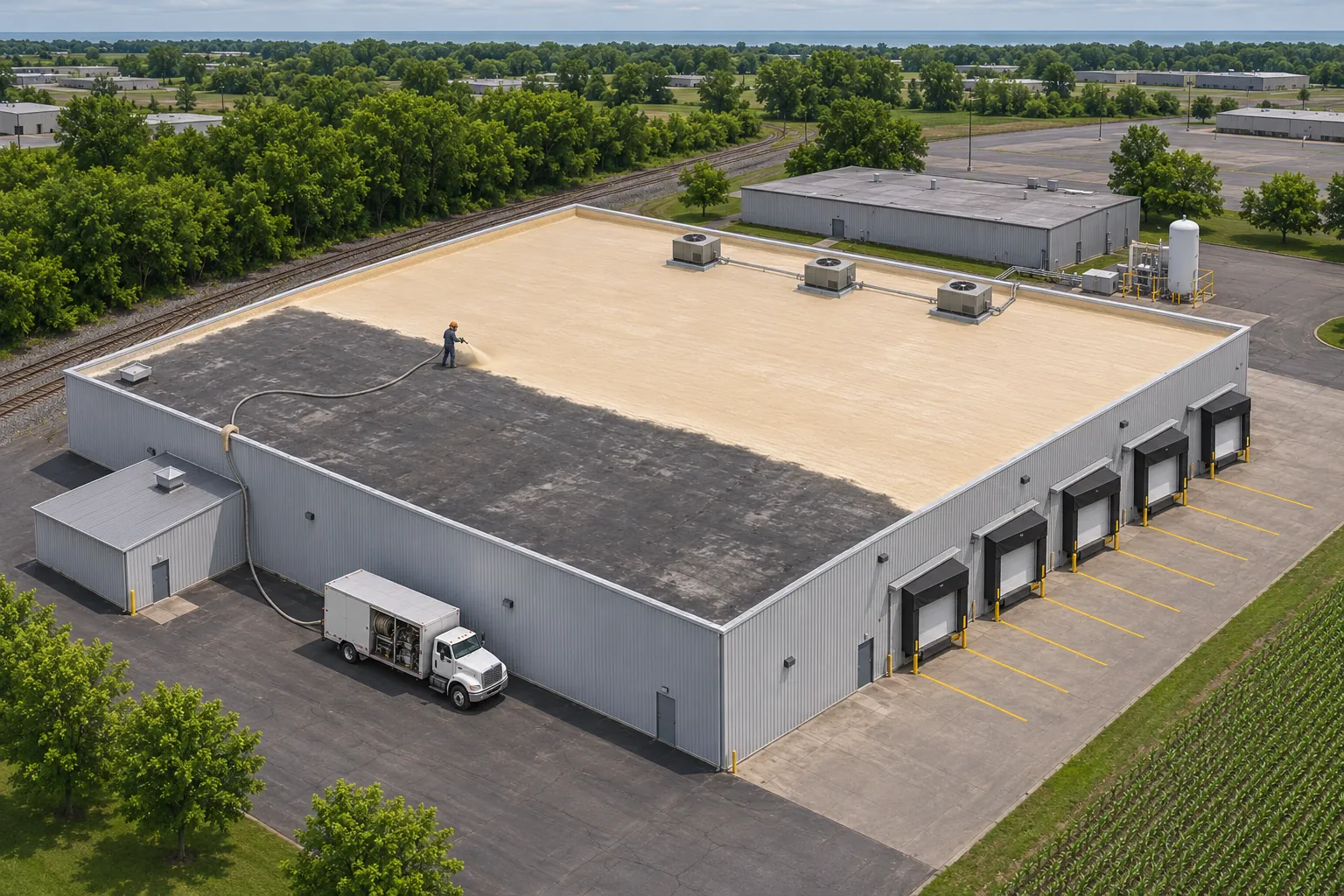
Insulating foam and topcoat over a dry, repaired deck.
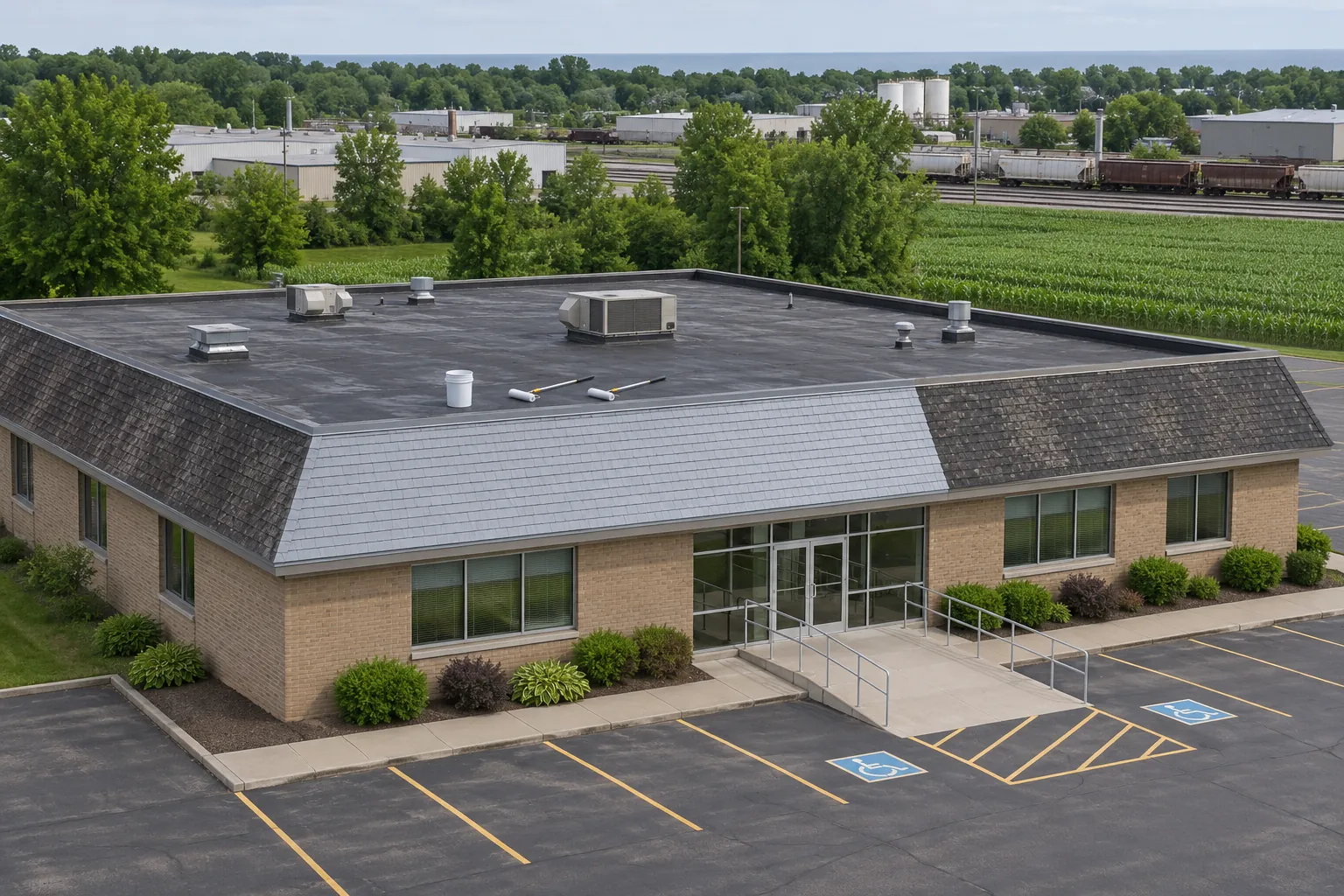
Coating flat, attached commercial shingles both makers approve.
Acrylic sits in the coating range of about $2.50 to $4.00 per square foot of roof, against about $5 to $8 for replacement. Roof size and access, rust and seam work, fastener sealing, the acrylic chosen, its thickness, and the number of coats set the figure once the roof is confirmed as a fit.
Acrylic softens under standing water and needs warm, dry days to cure, which shortens the season here. Shaded sections that stay damp are a practical drawback, so roofs with lingering water often suit silicone better.
An overnight cure is never assumed. Drying depends on the product, temperature, humidity, and any moisture expected during the drying period, and shaded panels and detailed areas dry slower than open ones.
Any time the roof surface, the overnight forecast, or the drying window falls outside the product limits. Damp shaded sections often lag behind the rest of the roof, so we wait until the whole roof is ready.
Yes, once the rust is brushed to firm steel and primed. The primer blocks rust stains from showing through the light topcoat.
Each coat dries fully before the next goes on. The time varies with sun, humidity, and coat thickness, and we check the base coat by touch before topcoating.
White acrylic reflects much of the sun that a bare or rusted panel absorbs, so the roof surface runs cooler on hot days. Rooms under the roof feel that most where insulation is thin.
Fabric goes where the roof moves or water gathers: laps, ridge closures, curbs, and penetrations. The open field between ribs takes the base coat and topcoat alone.
Send the roof size for a free ballpark range, or call to plan repairs ahead of the next warm season.