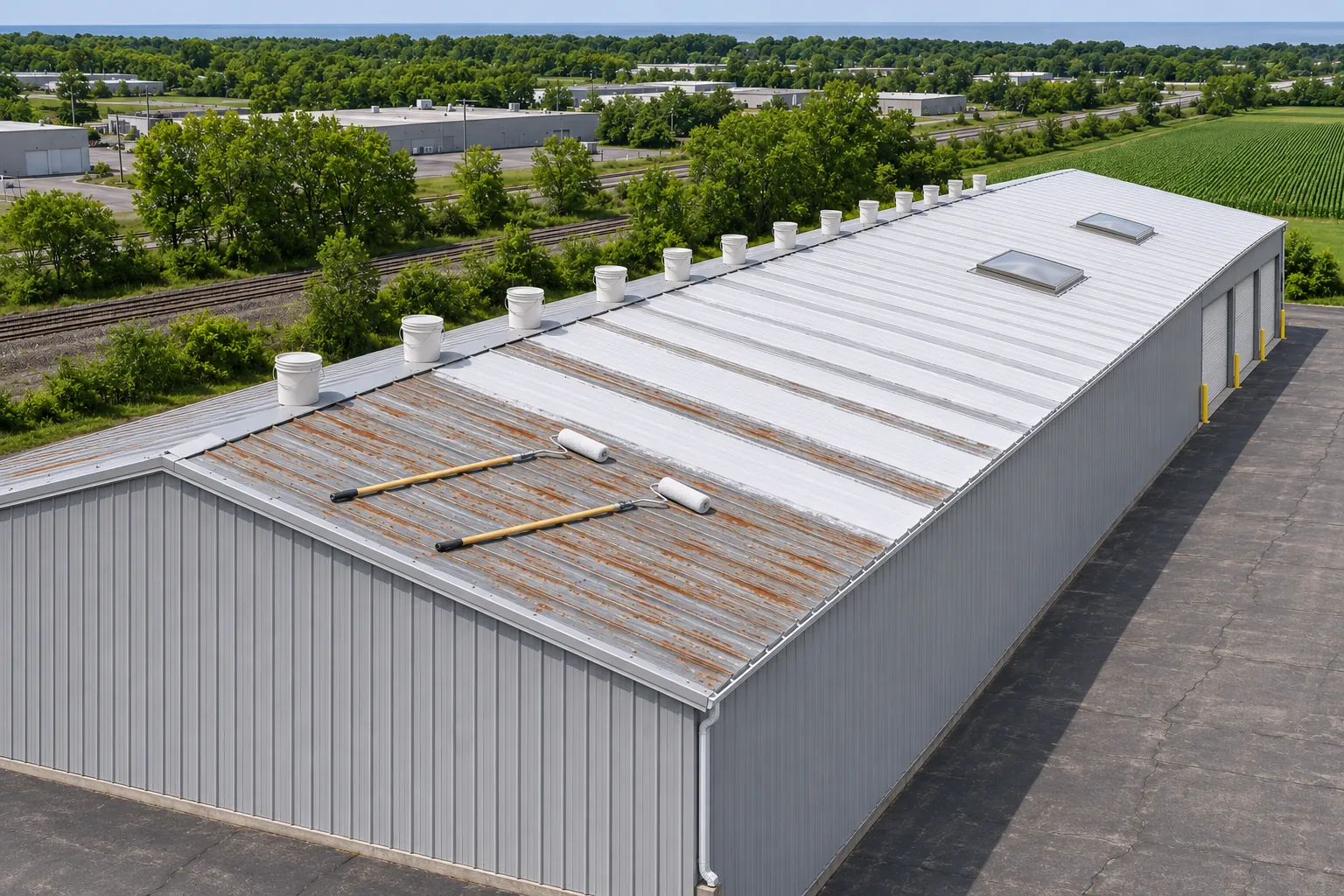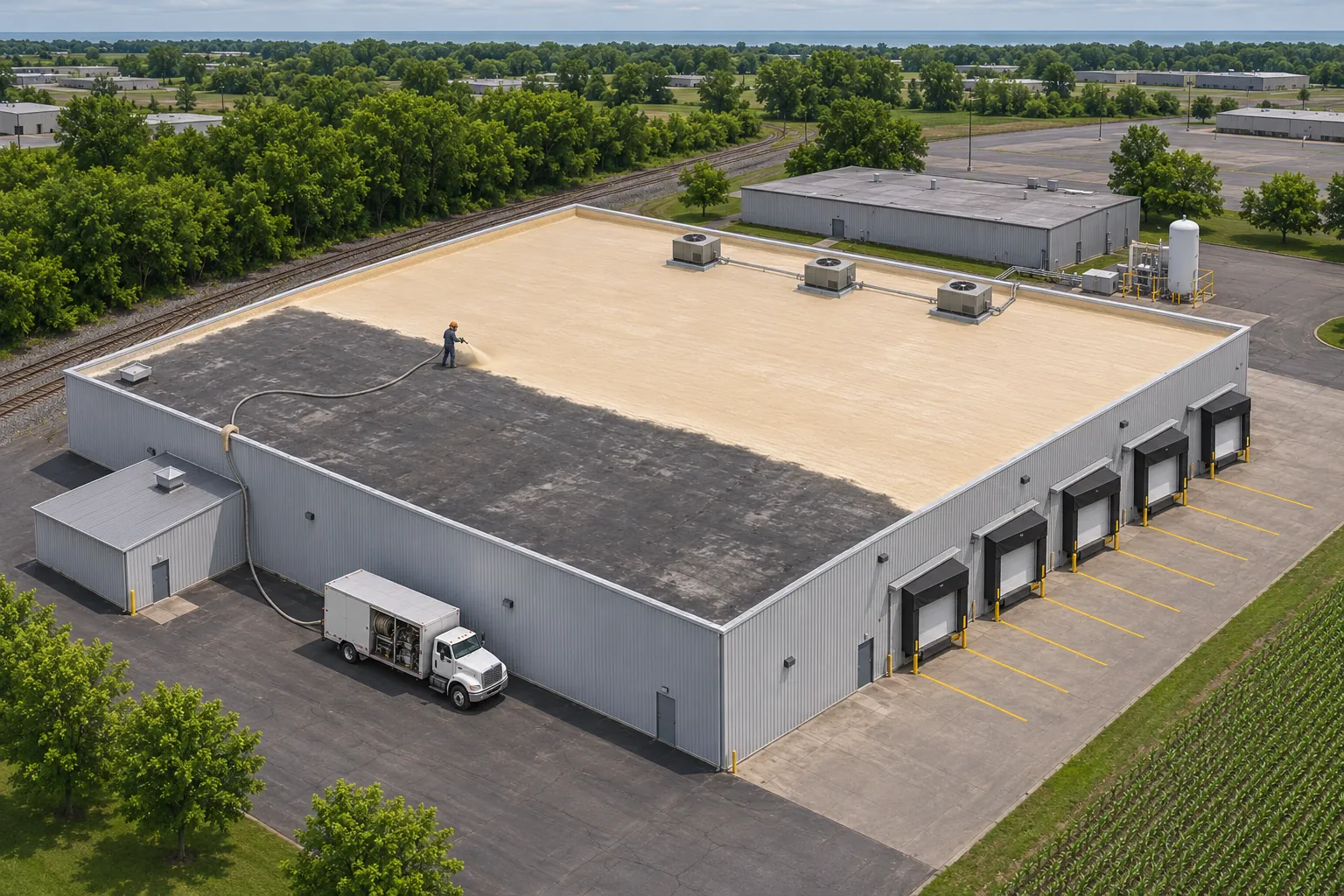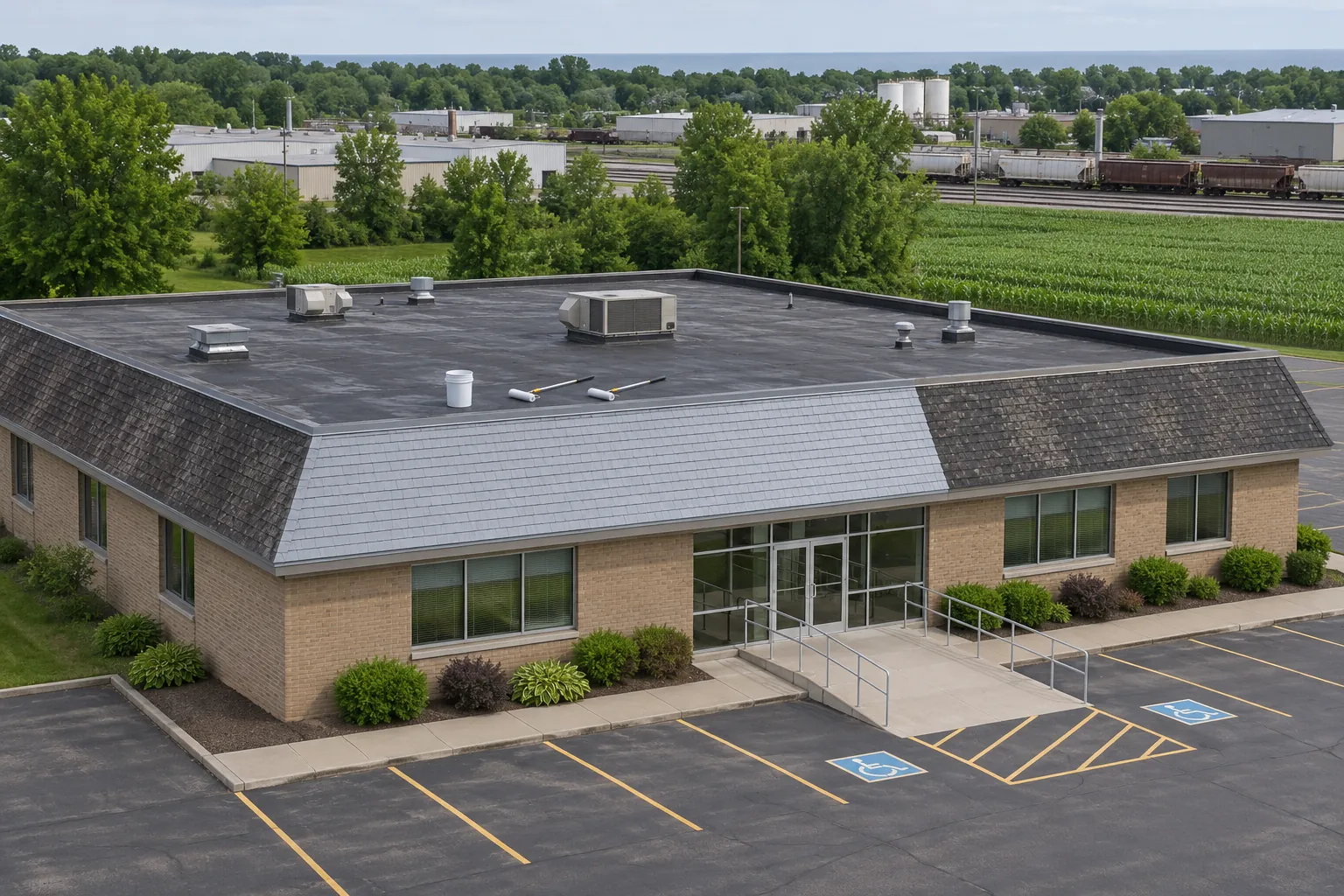
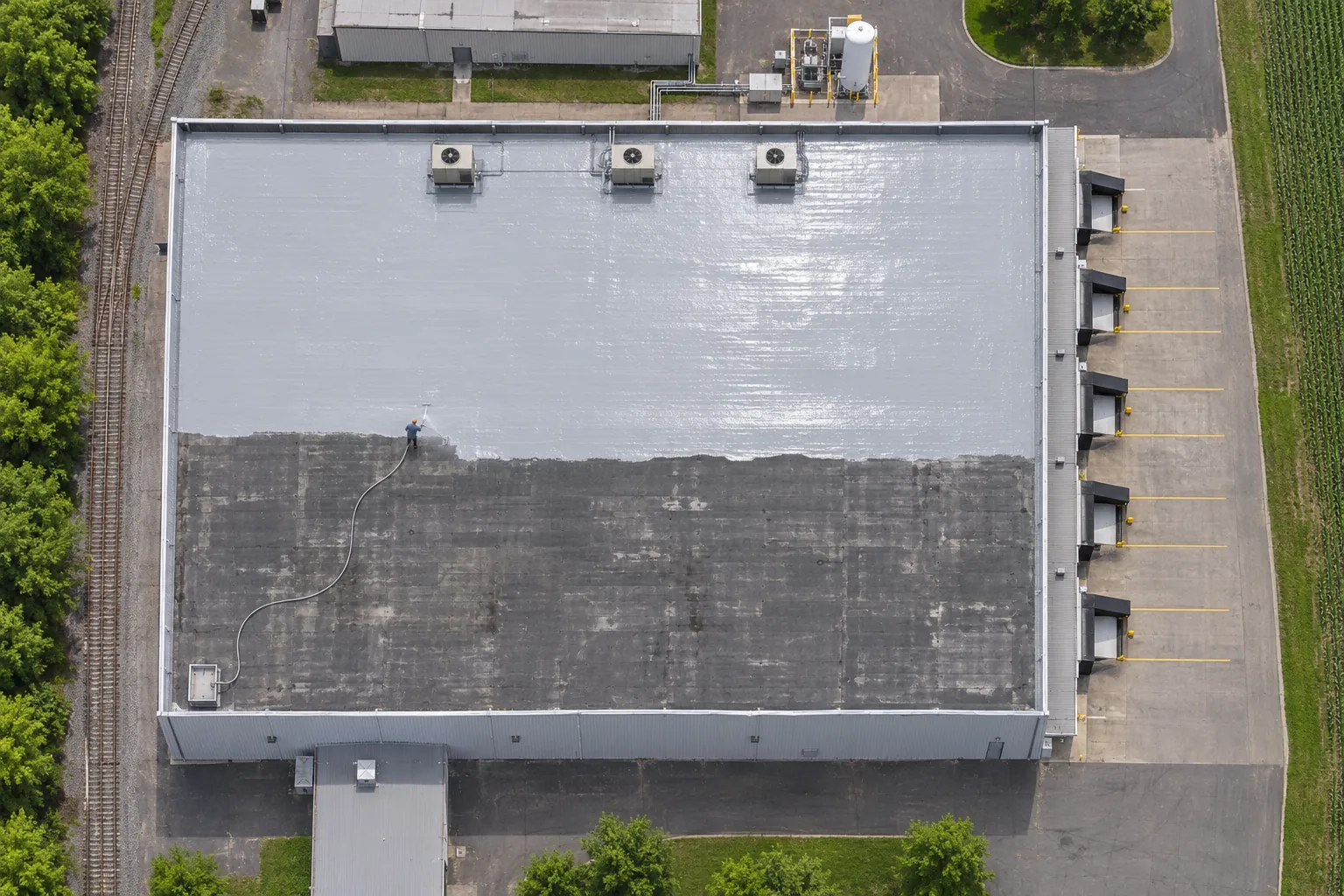
Top-down drone view of a low-slope commercial roof with a band of silicone coating rolled across it

Erie Silicone Roof Coating Contractor

Does Your Low-Slope Roof Hold Water After Storms?

Erie silicone roof coating suits low-slope roofs where water lingers. We trace why water stays, clear the outlets, then apply silicone.

  • Outlets cleared before coating
  • Roof surface temperature checked
  • Thick coats measured

Is Erie Silicone Roof Coating Right for This Roof?

Erie silicone roof coating fits low-slope roofs on a solid assembly. The raised column shows that roof; the others point elsewhere.

Fits Silicone

Ready for Silicone

Slope
Low slope or nearly flat
Standing Water
Shallow areas that clear within days
Substrate
Metal, old coating, or membrane holding tight
Future Upkeep
Owner fine with silicone-only repairs
Weather Window
Dry roof inside product temperature limits
Better With Acrylic

Slope
Sloped panels that drain fast
Standing Water
Rarely any standing water
Substrate
Metal panels in good shape
Future Upkeep
Owner wants easy recoats
Weather Window
Warm, dry stretch available

Repair Drainage First

Slope
Deck sagging into a bowl
Standing Water
Water standing for a week or more
Substrate
Wet insulation under the low area
Future Upkeep
Blocked or undersized outlets
Weather Window
Damaged deck sections

Roof Conditions We Check Before Silicone Roof Coating in Erie

Silicone handles moisture well, which makes the cause of that moisture the first thing we look at.

Silicone Coating Over Ponding Water

Silicone tolerates water better than most coatings, but it leaves the cause in place. Outlet restrictions and low or damaged areas are investigated and fixed before silicone goes down.

Silicone Roof Coating in Cold Weather

Cold metal and morning dew can keep silicone from curing well. We measure the roof surface itself, including shaded panels, rather than trusting the air reading.

Outlets Choked With Debris

Leaves, grit, and old patch scraps block scuppers and drains. Cleared and repaired outlets let water leave before it sits under the new coating.

Port Warehouse Roof Sections

Wide, low roofs near the bay collect water at expansion joints and low corners. Those spots get the closest look and the heaviest coating.

Equipment Service Paths

Technicians walking to rooftop units scuff and puncture coatings. Walk pads and planned paths protect silicone where people cross the roof.

Old Coatings Underneath

Earlier coatings and patches are tested for adhesion. Some take silicone with a primer; others are removed so the new coat bonds well.

Commercial Roof Coating Options for Erie

Silicone comes in a few forms. These are the ones we choose between on Erie roofs.

OptionWhere It FitsWhat To Know
High-solids silicone, one heavy coatRoofs with sound, clean surfacesFewer passes, careful thickness checks
Silicone with primerRusted metal or older coatingsPrimer blocks bleed-through and rust
Silicone with fabric at seamsLaps and joints that moveReinforces the busiest details
Silicone over spray foamFoam roofs needing a topcoatProtects foam from sun and wear

Benefits of Coating Your Roof

Here is what silicone coating changes for the people tied to the building.

Owner

  • Restoring a low-slope roof costs less than tearing off panels or membrane.
  • Areas that hold water get a coating made to handle it.
  • Drainage repairs done first protect the deck under low spots.

Facility Manager

  • Cleared outlets and gutters cut down winter ice buildup.
  • Silicone repairs are simple patches with matching material.
  • Recorded thickness readings make future inspections easier.

Tenants And Staff

  • Fewer drips near docks keep floors and stock dry.
  • A light surface cuts summer heat over offices and break rooms.
  • Work zones move section by section around busy areas.

Water Standing on the Roof Days After Rain?

Call and tell us where it collects. We will find out why the water stays before talking about silicone.

How Silicone Roof Coating Gets Applied in Erie

Five steps, starting with the drainage and ending with measured silicone.

  1. Step 1

    Inspect Your Roof

    We map where water collects, check outlets and gutters, and test old coatings for adhesion. Core samples show whether insulation under low spots is dry.

  2. Step 2

    Fix the Drainage Path

    Blocked outlets are cleared, damaged ones repaired, and soaked insulation under low areas is replaced with dry material.

  3. Step 3

    Clean the Surface

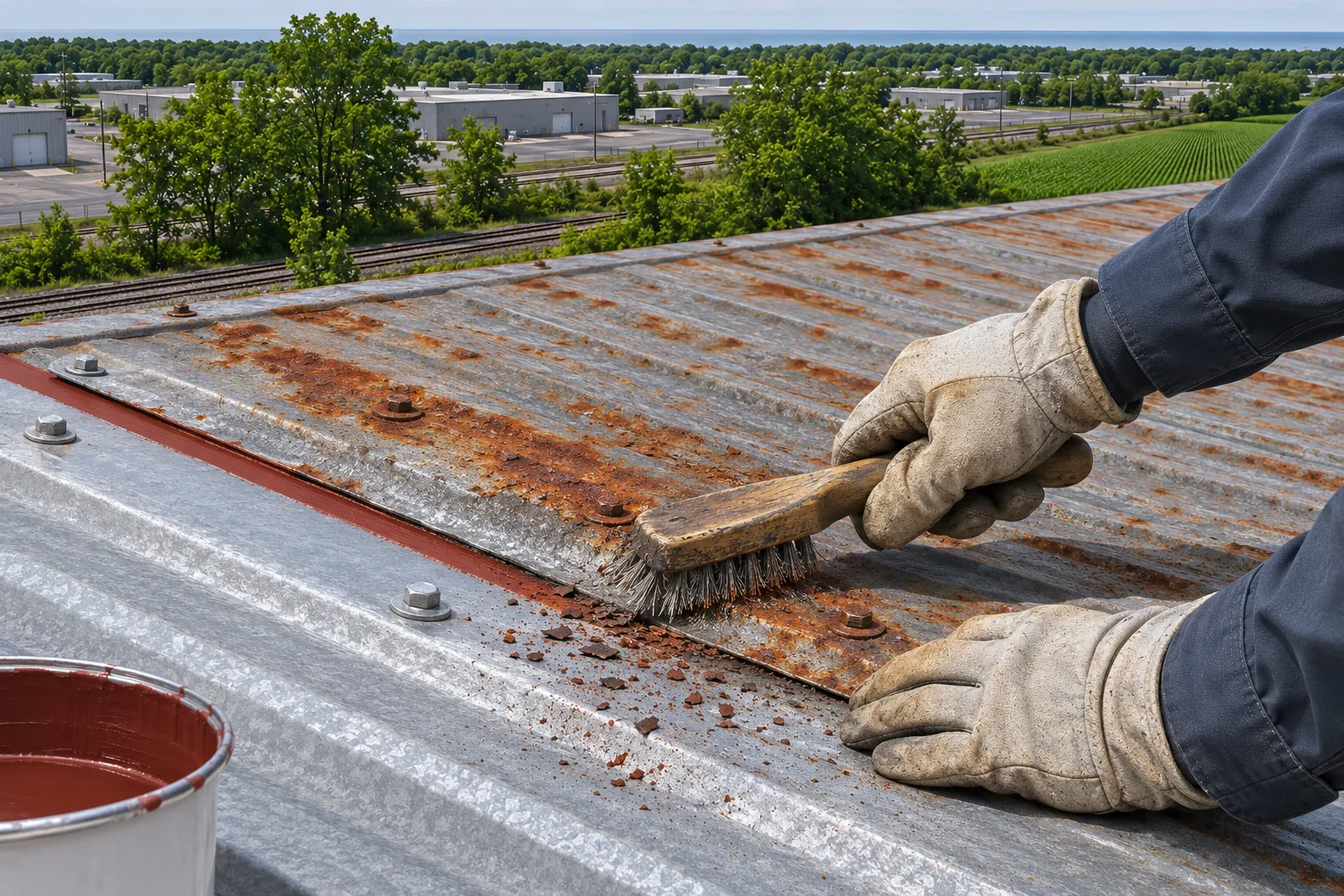
    Pressure washing removes dirt and loose coating. Rusted metal is brushed and primed, and the roof dries fully before coating.

  4. Step 4

    Reinforce Seams and Penetrations

    Laps, curbs, and pipe flashings get silicone with fabric where they move, ahead of the field coat.

  5. Step 5

    Apply Silicone to Thickness

    Silicone goes on in one or two passes at the thickness the product calls for, inside its temperature limits, checked as we go.

Other Coatings We Apply in Erie

When silicone is the wrong fit, one of these four usually suits the roof.

Silicone Roof Coating Questions From Erie Owners

Silicone Roof Coating Cost

Silicone falls inside the coating range of about $2.50 to $4.00 per square foot of roof, against about $5 to $8 for replacement. Drainage repairs, primers, the number of coats, and work around heavily serviced equipment move a roof within that range.

Downsides of Silicone Roof Coating

Silicone holds dirt more than acrylic, and later repairs need silicone or a primer made for it, since most products release from it. Rooftop equipment crews also wear it down, so we plan walk pads and repair materials before choosing it.

Can Silicone Go Where a Port Warehouse Roof Holds Water?

It can, when the product is rated for that water and the roof assembly is solid. We first find why water stays, checking outlets and low or damaged areas, because a water-tolerant coating leaves drainage problems and sagging sections as they were.

How Cold Is Too Cold for Silicone?

The product sheet sets the limit, and we check it against the roof surface, the moisture on it, and the forecast beyond the application day. Shaded panels and details often run colder than the air reading, so the work window is set by the roof itself.

Is Silicone Slippery for Roof Workers?

Wet silicone is slick, which is one more reason for walk pads on service paths. We mark routes to units and hatches so crews know where to step.

Does Silicone Need a Primer?

On rusted metal, older asphalt products, and some coatings, a primer is needed to stop rust and bleed-through. Clean, compatible surfaces can take silicone directly; adhesion tests decide.

Can Silicone Go Over an Old Silicone Coating?

Most worn silicone roofs take a fresh silicone coat well after a thorough cleaning, since silicone sticks to itself. We wash off dirt and loose material, test adhesion on a small patch, and then recoat the areas that have worn thin.

Why Does Silicone Collect Dirt?

Gray film on a silicone roof is airborne dirt held by the slightly tacky surface. It dulls the white finish over time; a gentle wash during inspections restores much of the reflectivity without harming the coating.

Hire an Erie Silicone Roof Coating Contractor

Send the roof size for a free ballpark range, or call to have the drainage looked at first.

Call Us(582) 622-2586